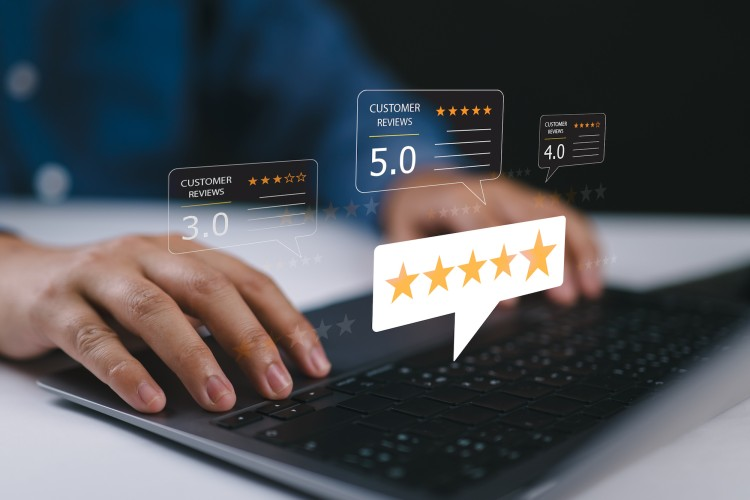
When choosing new software, most buyers instinctively look at star ratings first. A product with 4.8 stars naturally feels more trustworthy than one with 3.9.
This quick comparison method has become standard practice across SaaS directories and review platforms. The assumption is simple: higher ratings mean better software.
However, the reality is far more complicated. Star ratings often reflect opinions rather than verified experiences, and they rarely tell the full story. Many buyers make expensive software decisions based solely on these ratings, only to discover later that the tool doesn’t meet their expectations.
Moreover, SaaS platforms and vendors understand how influential ratings are. Consequently, many companies actively encourage reviews, optimize their profiles, and sometimes manipulate feedback systems to appear more favorable.
Platforms like G2, Capterra, and SaaSworthy provide valuable information. However, relying only on star ratings can lead to incomplete or misleading conclusions.
Smart buyers are learning to look beyond ratings and evaluate reviews more critically before making decisions.
The Dark Side of Star Ratings: Fake Reviews and Incentivized Feedback
Star ratings seem objective at first glance. A numerical score feels scientific and reliable, making it easy for buyers to compare different tools quickly.
Many SaaS reviews are influenced by incentives. Some companies offer gift cards, discounts, or perks in exchange for reviews. While these reviews may be genuine, incentives can encourage overly positive feedback.
Moreover, satisfied customers are more likely to leave reviews than frustrated ones. Due to this, ratings often skew toward positive experiences and fail to represent the average user.
Another issue is fake reviews. Some vendors create multiple accounts or hire agencies to leave positive feedback. However, detecting these reviews can be difficult because they often appear legitimate.
Consequently, a product with hundreds of five-star reviews might not actually be better than a competitor with fewer ratings. Many directories do attempt moderation. However, the sheer volume of reviews makes it nearly impossible to verify every submission thoroughly.
As a result, star ratings should be treated as a starting point rather than a final decision-making tool.
3 Signs a SaaS Review Might Be Fake (What to Look For)
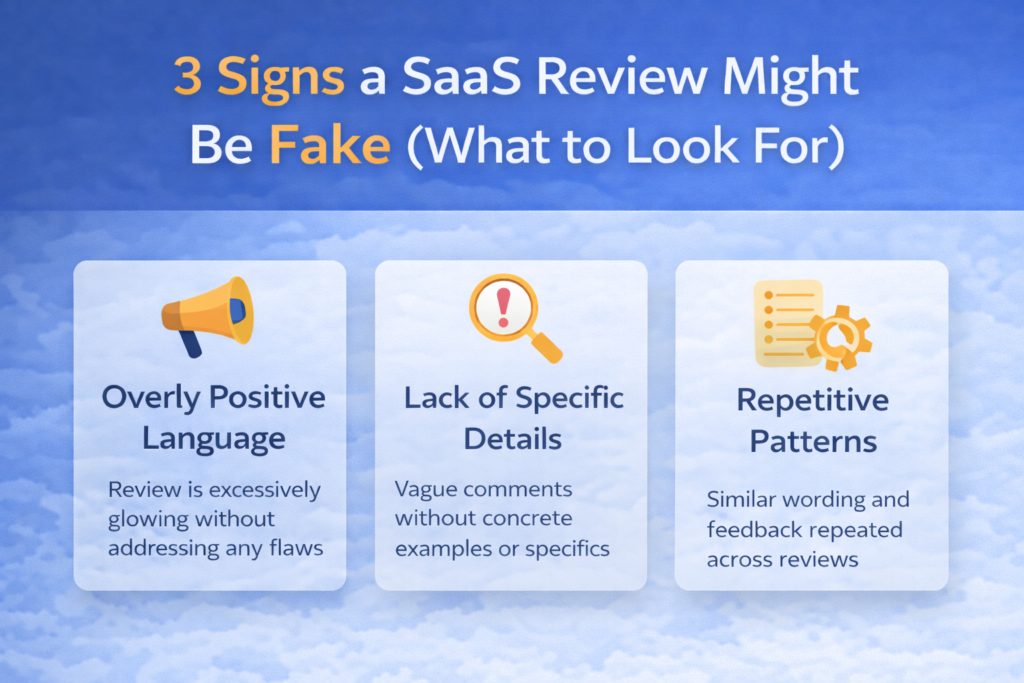
Spotting fake reviews is an essential skill for modern software buyers. While not all suspicious reviews are fake, certain patterns appear frequently in manipulated feedback.
However, many users do not know what to look for. Consequently, misleading reviews often go unnoticed.
1. Overly Positive Language
Reviews that sound like marketing copy rather than real experiences can be suspicious. Phrases like “best software ever” or “perfect in every way” often lack credibility.
Moreover, genuine reviews usually include both pros and cons. Reviews without any criticism should be viewed cautiously.
2. Lack of Specific Details
Real users typically mention specific features or use cases. Whereas fake reviews often stay vague and generic.
Moreover, short reviews that only praise the product provide little value and should not be heavily weighted in your decision.
3. Repetitive Patterns
Multiple reviews using similar wording can indicate coordinated activity. Most buyers never compare reviews closely enough to notice patterns.
Moreover, clusters of reviews posted within a short timeframe can be suspicious. So it is thought that sudden rating spikes may indicate incentivized campaigns. By learning to recognize these warning signs, buyers can make more informed decisions.
How SaaS Platforms “Game” the System to Look Better
SaaS companies compete fiercely for visibility on review platforms. High ratings improve credibility, search rankings, and conversion rates.
However, this competition has created an environment where optimization sometimes replaces authenticity. Many SaaS companies often avoid asking unhappy customers for feedback. They actively encourage satisfied customers to leave reviews.
Consequently, ratings become skewed toward positive experiences. Some companies also time their review campaigns strategically. The buyers may interpret these bursts of reviews as organic growth.
The vendors often guide customers on what to write, due to which reviews may reflect suggested talking points rather than genuine opinions. Another tactic involves focusing on easy wins.
Consequently, early impressions dominate ratings while long-term issues remain underrepresented. This does not mean all reviews are fake or manipulated. It does mean ratings often present an incomplete picture.
So buyers should combine ratings with deeper research before making decisions.
The Saasreviewer.io Solution: Unbiased, Expert-Led Analysis
Because of these challenges, many buyers are turning to expert-led reviews instead of relying only on ratings. Expert analysis focuses on real testing rather than aggregated opinions.
One example is Saasreviewer.io, which emphasizes structured and hands-on software evaluation. However, expert reviews go beyond simple ratings. Instead of assigning stars alone, they explain strengths, weaknesses, and ideal use cases.
Also, expert reviewers test features directly. Consequently, their insights often reveal limitations that user reviews overlook. Hands-on testing improves accuracy. However, vendor claims do not always match real-world performance.
The independent testing helps buyers make more informed decisions. Security is another critical factor often missing from user reviews. However, security considerations can make or break a software decision.
Moreover, structured testing ensures consistency across reviews so buyers can compare tools more effectively. This approach creates a more reliable alternative to star-based evaluation systems.
Conclusion: Moving Beyond the 5-Star Myth
Star ratings provide a quick snapshot of user sentiment and help narrow down options. They are convenient and easy to understand. However, ratings alone rarely tell the full story. Important factors like usability, scalability, and limitations often go unmentioned.
Moreover, fake reviews and incentivized feedback can distort ratings. Consequently, high scores don’t always indicate better software. Directories remain useful for discovery. The deeper research is essential before making a final decision.
By combining user feedback with expert analysis provides a more balanced perspective. Consequently, buyers can avoid costly mistakes. Moving beyond the five-star myth means asking better questions and looking deeper than ratings alone.
In 2026, the smartest software buyers are not the ones who choose the highest-rated tool. But they are the ones who choose the most thoroughly evaluated one.
FAQs: Are SaaS User Ratings Accurate?
1. Are SaaS user ratings accurate?
SaaS user ratings can be helpful, but they are not always completely accurate. Many ratings reflect individual experiences, which may not represent the average user. Moreover, incentivized or biased reviews can make ratings appear more positive than they actually are.
2. Why are SaaS star ratings sometimes misleading?
Star ratings can be misleading because they simplify complex experiences into a single number. However, software performance depends on factors like business size, use case, and integrations. Consequently, a five-star tool for one company may not work well for another.
3. Can SaaS reviews be fake?
Yes, some SaaS reviews can be fake or incentivized. Some vendors encourage customers to leave positive feedback in exchange for rewards. However, most platforms try to moderate reviews to reduce abuse. Consequently, buyers should still read reviews carefully instead of trusting ratings blindly.
4. How can I tell if a SaaS review is real?
Real SaaS reviews usually include:
- Specific features or use cases
- Both pros and cons
- Detailed experiences
- Real-world examples
However, vague or overly positive reviews may be less reliable. Consequently, detailed reviews are usually more trustworthy.
5. Why do most SaaS tools have high ratings?
Most SaaS tools have high ratings because satisfied users are more likely to leave reviews. Moreover, companies often encourage happy customers to share feedback. Consequently, ratings tend to skew positive and may not reflect all user experiences.
6. Should I trust SaaS directories for software decisions?
SaaS directories like G2 and Capterra are useful for discovering tools. However, they should not be the only source of information. Consequently, combining directory ratings with expert reviews leads to better decisions.
7. What is better than relying on star ratings?
Hands-on testing and expert reviews provide deeper insights than star ratings alone. Platforms like Saasreviewer.io focus on structured analysis and real testing. Consequently, buyers get a clearer understanding of how software performs in real situations.
8. How many reviews are enough to trust a SaaS rating?
There is no exact number, but more reviews generally provide a better overall picture. However, even a large number of reviews can be misleading if they lack detail. Consequently, quality matters more than quantity when evaluating SaaS reviews.