Email marketing has proven itself to be one of the highest-performing channels in digital marketing today. More and more businesses are investing more of their budgets in paid advertising (PPC) and social media campaigns. However, email continues to provide superior levels of engagement, maintains higher rates of customer retention, and has a significantly more defined conversion path. Email marketing also looks very different from what it did just a few short years ago. Gone are the days of just sending out a simple newsletter. Modern email marketing solutions enable marketers to send personalized messages to their customers using artificial intelligence, automate customer journeys, track customer behaviour, and provide extensive analytics on results.
As a marketer, you must have access to an email marketing platform that is aligned with your overall business goals, your audience’s size, and your marketing strategy. A small business may need a platform that is simple to use and affordable. However, larger companies generally require e-commerce integration, advanced segmentation, and deeper analytics. This guide will take you through the five best email marketing platforms for producing high conversion rates. You will be able to compare features, the level of automation available, pricing versus value, and the best use cases for each of the platforms. Additionally, you will determine which platform will work best for your business model.
Why Email Marketing Still Matters?
Email marketing remains one of the most effective methods of connecting with customers, especially when compared to other digital platforms. Many businesses have built large subscriber bases that will help keep them in the black, while social media companies are changing their algorithms at an alarming rate, and digital advertising costs are continually rising through both search engines and social networks. By using email as a direct channel to communicate with their customers, businesses can drive increased levels of engagement, loyalty, and repeat purchases. By streamlining workflows through automation, email campaigns allow companies to maximize their results while minimizing the time spent managing the campaign.
Recent research has proven that personalized email campaigns generate much higher click-through rates and offer far better opportunities for conversion than do generic email campaigns. Today, many marketers utilize extensive segmentation, behavioral targeting, and automation in order to generate superior campaign results. The use of artificial intelligence is becoming more prevalent with the introduction of new tools that can optimize subject lines, predict send times, and automate a user’s journey through machine learning.
What Makes an Email Marketing Tool Effective?
High-performance email platforms are much more than just sending newsletters! Powerful tools give businesses the ability to automate their communication with customers and to create data-driven campaigns that enhance relationships with their customers while at the same time using automation and data to drive conversions from each campaign. Several features of an email platform directly impact both conversion rates from email campaigns and the performance of a single email campaign.
Automation Workflows
Automation is the ability of businesses to send emails based on customer interactions. Automated campaigns can reduce manual workloads and give businesses better opportunities for timely responses to customers.
Common workflows include:
- Welcome sequences
- Abandoned cart emails
- Nurturing leads to buying from you
- Re-engaging customers who have not purchased in some time
- Upselling during the buying process
Automated emails generally lead to better performance for the sending business because customers receive the email at an optimal time.
Audience Segmentation
Segmentation provides a way for marketers to reach and engage specific groups of subscribers. Generic (untargeted) campaigns typically underperform due to lower engagement rates of those who receive the generic campaign than do targeted campaigns.
The advanced platforms segment users are based on:
- Purchasing history
- Interests
- Activities on the website
- Engagement with emails received from you
- Demographics of purchased items
Targeted campaigns will develop stronger relationships with customers as well as higher conversion rates.
AI Personalization
Today’s email platforms use AI to improve the performance of email campaigns by optimizing different elements of an email, including improving subject lines on emails and recommending relevant content based upon a customer’s past activity, and optimizing the timing of sending the email.
Personalized campaigns tend to have better open rates than other campaigns because recipients are receiving relevant content.
Analytics and Reporting
Having detailed analytics allows the business owner to improve their future campaigns based on the data collected from previous campaigns. Comprehensive reporting tools that provide detailed analytics help provide support for making marketing decisions in the future. Some of the most meaningful data points that provide feedback on the success of an email campaign are:
- Open rates for the specific email sent
- Click-through rates are provided with each email sent
- Revenue performance
- Conversion rates
- Activity of subscribers
The more accurate the data provided from the analytics, the higher the ability of the business owner to make a good marketing decision.
1. Mailchimp, Best Email Marketing Tool for Small Businesses
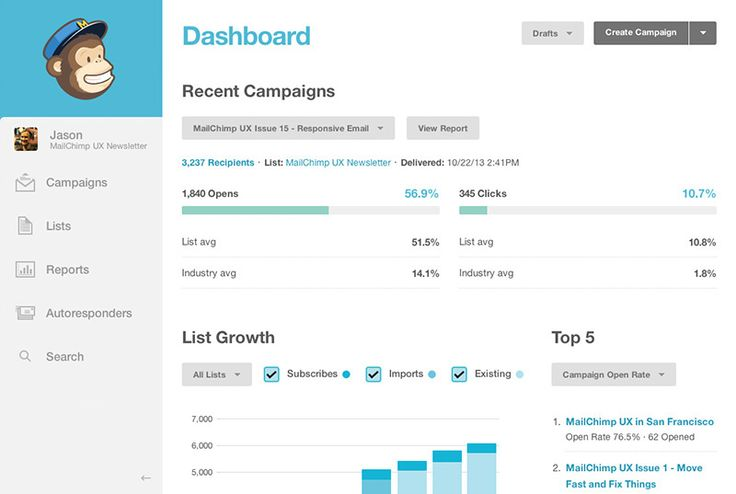
For small business owners or those running new businesses, Mailchimp is still one of the most utilized marketing email service providers available. With its easy-to-use platform, simple automation features for beginners, and competitive pricing options, it’s easy to see why many companies use Mailchimp over other email marketing service providers.
Typically, smaller teams have used Mailchimp as there is no technical expertise required in order to create a successful email marketing campaign, as Mailchimp provides pre-designed templates and easy-to-use drag & drop editors.
Key Features
- Drag-n-Drop Email Builder
- Automate Customer Journeys
- Suggestions for AI Content
- Segmentation of Audiences
- Landing Pages
- A/B Testing Tools
In addition to the above features, Mailchimp also has the ability to provide limited customer relationship management (CRM) capabilities. You can manage your subscriber lists as well as any interactions with customers from the same page.
Why Mailchimp Performs Well
Usability is a top priority for Mailchimp. Marketers will be able to set up their campaigns much quicker while minimizing the complexity associated with doing so. Also, simple automation workflows provide marketers with another way to stay in touch with their customers consistently.
Mailchimp is especially suited to businesses that have small lists, but more experienced marketers will likely require higher-level automation features over time.
Best For
- Startups
- Small-sized businesses
- New to email marketing
- Local-owned businesses
2. HubSpot, Best All-in-One Marketing Platform
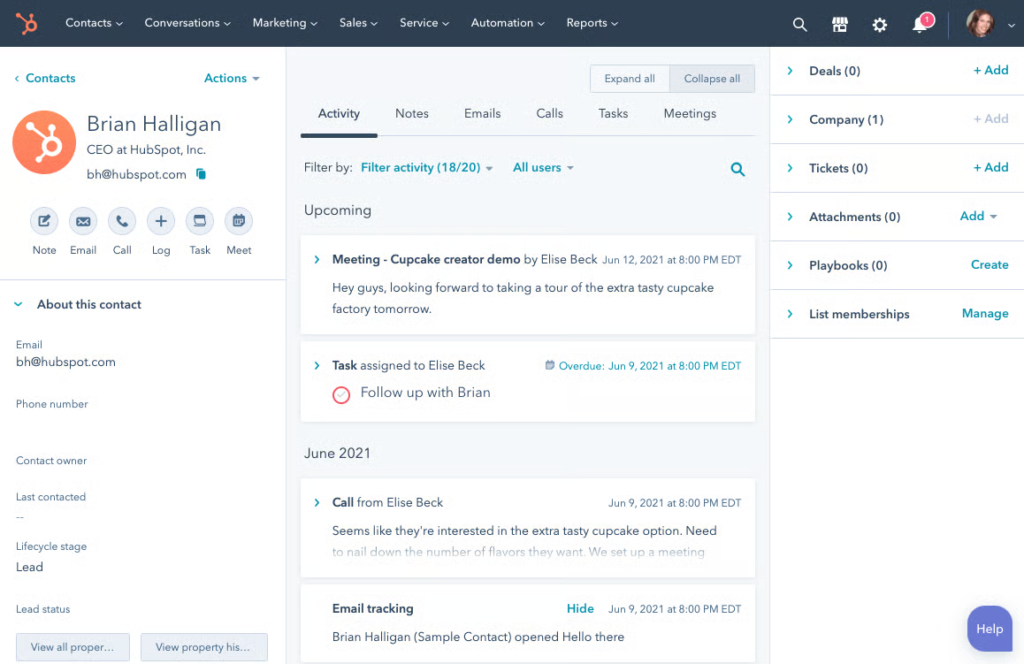
At the time of this writing, HubSpot’s platform is one of the most robust marketing solutions available in 2026. Each component includes CRM, Email automation, Sales tracking, and Customer support tools integrated into one platform. Customers who use HubSpot will likely see greater success when leveraging customer data since all of the information is in one place.
Key Features
- CRM Integration
- Lead Scoring
- Behavioral Tracking
- Smart Personalization of Content
- AI Writing Assistance
HubSpot enables Marketers to create highly personalized marketing campaigns through real-time customer data. Marketers and Salespeople can utilize the same customer data.
Why HubSpot Performs Well
HubSpot allows marketers to target their campaigns based on an understanding of their customers. By enabling email automation to trigger against actions:
- purchasing a product
- filling out a form
- requesting a demo
- visiting the website
- downloading a document,
Marketers can create emails that will help increase their conversion rates by receiving more relevant communication when they complete an action.
Best For
- B2B companies
- Marketing agencies
- Enterprise teams
- Growing businesses
HubSpot is used primarily by B2B marketers and marketing agencies. Additionally, larger organizations are using the platform for its ability to provide valuable insights through data analysis. Smaller businesses might find that the price of HubSpot’s premium service is high, as contact lists will grow over time.
3. ActiveCampaign, Best Email Automation Platform
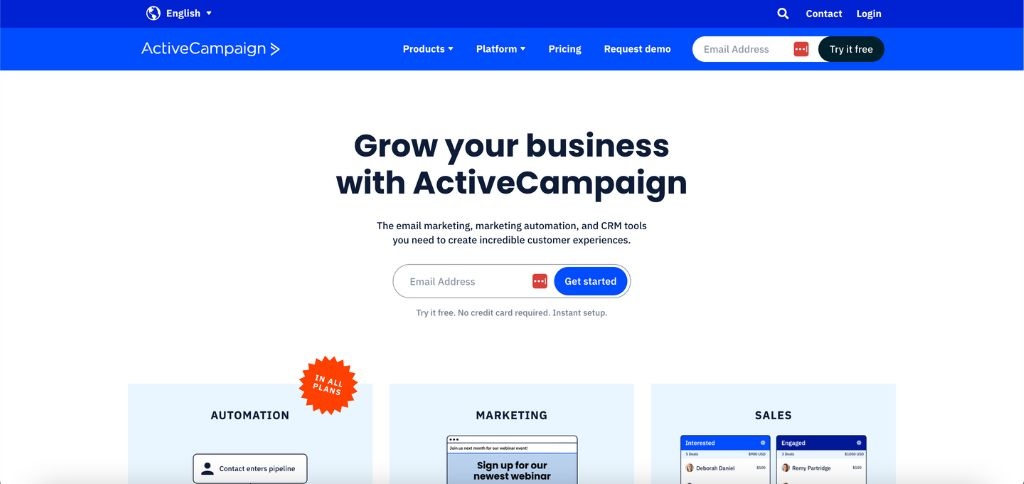
With advanced automated functionality and a customer journey manager to oversee every customer’s journey, ActiveCampaign has established itself as a credible source of highly productive automation for companies that put automation first and require complex workflows. Main features include:
Key Features
- A powerful automation builder
- Ability for predictive sending
- Seamless integration with a full suite of CRMs
- Dynamic content
- Sales automation
- Ability to track customers
The visual building of all aspects of the customer journey using an intuitive visual workflow engine.
Why ActiveCampaign Performs Well
Automation precision is a priority for ActiveCampaign. This allows companies to automate almost every aspect of a customer’s journey.
Popular workflows include:
- lead nurturing
- recovering abandoned carts
- product recommendations
- retaining customers
- re-engagement campaigns
- By utilizing predictive sending technology, users can send emails at the best time possible.
Those with experience utilizing automated platforms will benefit the most from using ActiveCampaign. Individuals who are new to utilizing highly automated platforms may have little to no time needed to learn about more complex automation systems.
Best For
- Advanced marketers
- Automation-focused teams
- SaaS businesses
- E-commerce stores
4. Klaviyo, Best Email Marketing Tool for E-Commerce
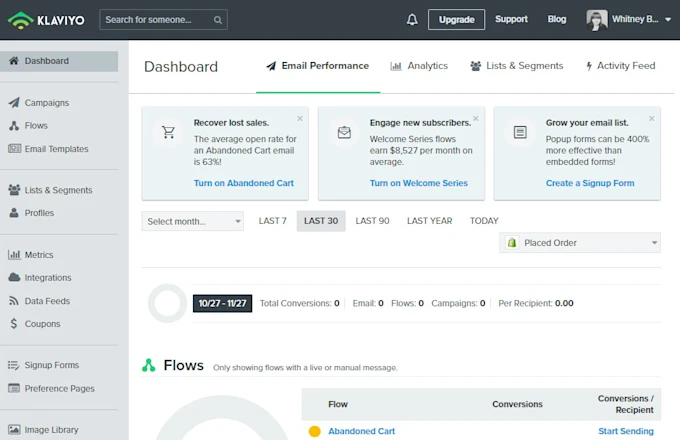
The dominance Klaviyo has within eCommerce email marketing is due to its extensive integration capabilities with online store platforms, being able to connect directly through platforms such as Shopify and WooCommerce, giving store owners a better view of how their customers behave and helping to improve their business by providing accurate insights into revenues.
Key Features
- Integration capabilities with eCommerce platforms
- Ability to track revenue and customer activity
- Ability to conduct SMS marketing campaigns
- Ability to target via behavior
- Advanced segmentation capabilities
- Automated workflows
Additionally, Klaviyo has the capability to track customer purchase history in real time.
Why Klaviyo Performs Well
Klaviyo enables businesses to have direct insight into eCommerce campaign revenue. Marketers can view which emails drive sales and also help retain customers. Klaviyo’s features excel in the area of recovering abandoned shopping carts through a recommendation engine that suggests to your customers products based on their previous behavior. Customer behavior data allows e-commerce businesses to build meaningful campaigns with high levels of targeting.
In general, eCommerce stores see better performance when customer data can be directly linked to their email automation process.
Best For
- Shopify stores
- E-commerce businesses
- DTC brands
- Online retailers
5. ConvertKit, Best Email Platform for Creators
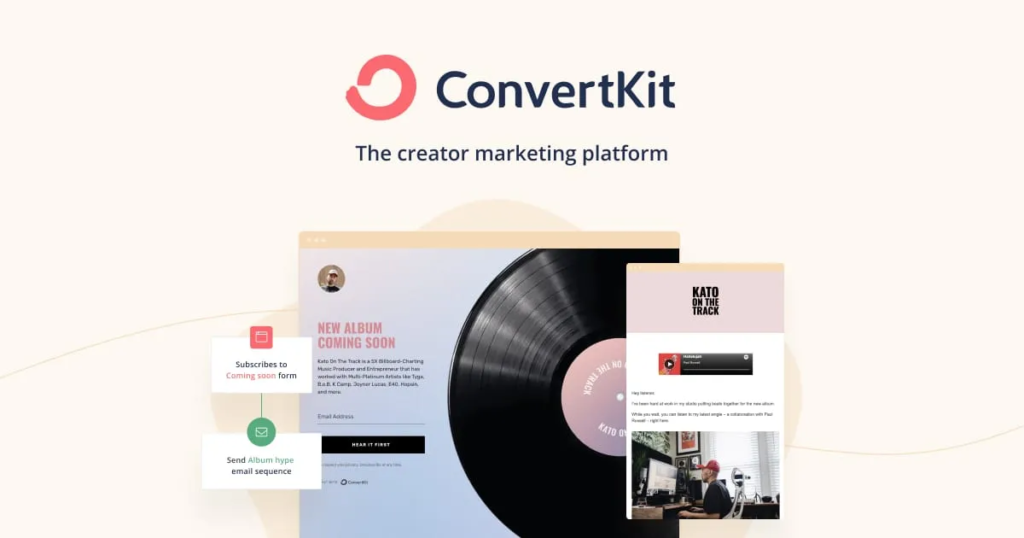
For creators, bloggers, coaches & digital entrepreneurs, ConvertKit offers a wide array of tools and features that are designed specifically for them. ConvertKit is built around a focus on simplicity and audience growth, as opposed to enterprise-class complexity.
Key Features
- Subscriber tagging
- Landing pages
- Email sequences
- Automation workflows
- Creator templates
- Audience segmentation
Additionally, ConvertKit allows creators to promote their digital products and monetize their newsletters.
Why ConvertKit Performs Well
Communication with audiences directly usually works better for creators than complicated automated solutions. To accomplish this, ConvertKit offers intuitive workflow tools and simple, effective segmentation capabilities. Businesses and creators may utilize interest, purchase, engagement history, and sign-up source to segment subscribers. Targeted audience-based campaigns are likely to result in enhanced subscriber retention and improved trust levels of customers.
Best For
- Bloggers
- Coaches
- Newsletter Creators
- Personal Brands
Comparison Table
| Tool | Best For | Automation Level | Ease of Use | CRM Support | Pricing |
| Mailchimp | Small businesses | Medium | Easy | Basic | Affordable |
| HubSpot | Enterprise marketing | Advanced | Moderate | Advanced | Expensive |
| ActiveCampaign | Automation workflows | Advanced | Moderate | Strong | Moderate |
| Klaviyo | E-commerce | Advanced | Moderate | Strong | Moderate |
| ConvertKit | Creators | Medium | Easy | Limited | Moderate |
Why Email Deliverability Matters
Email deliverability affects campaign success directly. Poor deliverability sends emails into spam folders instead of customers’ inboxes. Modern email platforms now focus heavily on sender reputation and authentication systems.
Strong deliverability depends on:
- Subscriber quality
- Email relevance
- Authentication protocols
- Engagement rates
- List hygiene
Businesses should regularly remove inactive subscribers and maintain clean email lists. Healthy subscriber engagement improves inbox placement over time.
How AI Changes Email Marketing in 2026
Artificial intelligence now powers many email marketing features. Businesses use AI tools to improve efficiency and campaign accuracy.
AI currently supports:
- Subject line optimization
- Predictive segmentation
- Automated copy suggestions
- Send-time optimization
- Customer behavior analysis
AI also reduces manual workload for marketing teams. Businesses can launch campaigns faster and improve personalization quality through automation.
Many platforms now combine AI personalization with behavioral targeting. That combination helps businesses create more relevant customer experiences.
Common Email Marketing Mistakes
Several mistakes continue to reduce conversion rates for many businesses.
- Poor Segmentation: Generic campaigns usually perform poorly because customers expect personalized communication.
- Excessive Email Frequency: Too many promotional emails increase unsubscribe rates and reduce engagement.
- Weak Subject Lines: Subject lines strongly influence open rates. Poor headlines often reduce campaign visibility.
- Lack of Automation: Manual campaigns limit scalability and reduce consistency.
- Ignoring Analytics: Performance data helps businesses improve future campaigns and customer targeting.
How to Choose the Right Email Marketing Platform
Selecting the best email marketing platform for your business involves whether you are a large, small, or mid-sized company, what type of audience you have, and what kinds of goals you have for your marketing efforts. If you want simplicity and affordability, select MailChimp. If you rely on customer relationship management (CRM) and advanced analytics to support your business, select HubSpot for your email marketing needs. If you want automation and customer journey management to be front and centre in your email marketing strategy, then select Active Campaign. If you have an e-commerce business and will require strong revenue tracking, select Klaviyo. If your focus is on audience growth through digital products/content, then select ConvertKit.
Final Verdict
In 2026, email campaigns continue to see strong returns on investment due in part to greater production efficiencies through increased automation, enhanced audience segmentation, and more extensive use of artificial intelligence for personalized messaging.
Every major email marketing platform has distinct characteristics; however, many small businesses choose Mailchimp because of its usability, while many mid-and large enterprises rely on HubSpot due to its extensive integrated capabilities. Many experienced marketers take advantage of ActiveCampaign’s advanced features, while many e-commerce businesses are using Klaviyo to monitor customer behavior and analyze revenue generation. Many content creators and bloggers rely on ConvertKit because of its focus on building relationships with their audiences.
Strong email marketing platforms provide capabilities beyond simply sending promotional emails. Good email marketing platforms will help you develop customer relationships, foster customer loyalty, automate communications, and ultimately provide you with additional revenue-generating opportunities.
FAQ’s
What is the best email marketing tool for high conversion rates?
Email marketing tools that provide the highest conversion rates are determined by your particular business requirements. HubSpot and ActiveCampaign are reputable email marketing platforms known for their advanced automation and personalization features, both of which can greatly enhance conversion rates.
Which email marketing platform is best for beginners?
Mailchimp (at times) is the best email marketing platform for new users since its interface is user-friendly and it provides several pre-designed template options. A new user can quickly launch an email campaign without needing extensive technical capabilities.
What email marketing tool is best for e-commerce businesses?
Klaviyo is an excellent email marketing platform for e-commerce since its email platform connects directly to online stores and allows you to determine the revenue generated from email.
Can email marketing tools increase sales?
Yes, through automated follow-ups, personalized messages, and targeting of the appropriate customer, using email marketing tools can increase sales. An example of this is ActiveCampaign, which allows businesses to send automated emails based on user behavior and thus improves the conversion rate.
Are free email marketing tools effective?
Small businesses and startups can run successful campaigns using free email marketing services. Mailchimp has a free plan with basic features (autoresponders and template selection) which would likely meet the needs of startups and companies with smaller campaigns.
What features improve email marketing conversions?
Key features that improve conversions include:
- Automation
- Personalization
- Segmentation
- A/B Testing
- Analytics
Most high-end solutions like HubSpot have features that will help improve email campaigns.
How much do email marketing tools cost in 2026?
Email marketing service providers typically charge between $10 and $150/month depending on the type of service and number of contacts an organization has in their database. Higher-end companies like HubSpot typically charge higher prices for more advanced features.
Which email marketing tool is best for creators?
ConvertKit is the best email marketing solution for content creators because they provide a simple way to automate email marketing campaigns by tagging subscribers and creating landing pages specifically designed for audience building.
Do email marketing tools support automation?
Yes, the vast majority of email marketing service providers offer automation. Services such as ActiveCampaign provide businesses with the ability to set up automated workflows based on customer behaviors (e.g., welcome emails, abandoned cart emails, etc.).
Is email marketing still effective in 2026?
Yes, email marketing continues to be one of the most valuable types of digital marketing available. With the right provider (e.g., Klaviyo and HubSpot), companies can utilize targeted email marketing campaigns that yield predictable results.