The Software-as-a-Service (SaaS) industry is undergoing one of the most significant transformations since the rise of cloud computing. In 2026, generative artificial intelligence is no longer an experimental feature. It has become a core component of modern software platforms. From automated workflows to intelligent assistants, AI-powered tools are redefining how businesses interact with software.
Generative AI is shifting SaaS platforms from static tools into dynamic systems. These are capable of generating content, analyzing data, and assisting users in real time. Instead of manually configuring software, users can now interact with applications via natural-language prompts and automated suggestions.
This transformation is not limited to a single category. Customer relationship management, project management, marketing automation, and analytics platforms are all integrating AI capabilities. Companies like Microsoft, Salesforce, and Google are embedding generative AI directly into their SaaS ecosystems.
As discussed in Top 10 AI Video Generators 2026: Create Content Without a Camera, AI-powered automation is rapidly becoming a standard feature rather than a premium add-on. In SaaS, this shift is changing not only how software works but also how businesses operate. Generative AI isn’t just about code; it’s already powering the [best AI writing tools] that businesses use for content.
What Is Generative AI in SaaS?
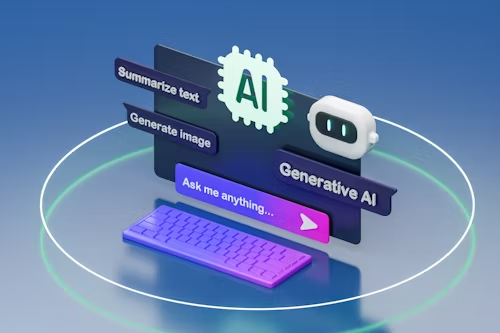
Generative AI refers to artificial intelligence systems capable of producing content, insights, or actions based on user input. Unlike traditional automation, generative AI can create original outputs rather than simply executing predefined commands.
For SaaS platforms, this means software can now:
- Generate reports
- Write content
- Analyze trends
- Suggest actions
- Automate workflows
- Answer questions
Technologies such as those developed by OpenAI and other AI providers are powering these capabilities across many platforms.
Instead of navigating complex dashboards, users can now request information conversationally. This approach reduces the learning curve and makes software more accessible. To stay ahead, you must understand the [future of SaaS] and how AI is rewriting the rules.
The Evolution of SaaS
SaaS has evolved through several distinct phases, which are as follows:
Phase 1: Cloud-Based Access
Early SaaS platforms focused on moving software from local installations to the cloud.
Phase 2: Integration
Platforms began integrating with other tools to create unified workflows.
Phase 3: Automation
Automation features reduced repetitive tasks.
Phase 4: AI Integration
Generative AI is now transforming SaaS into intelligent systems.
This progression reflects broader SaaS trends similar to those discussed in Must-Have SaaS Tools for Healthcare Providers (HIPAA Compliant), where automation and integration play central roles.
AI-Powered Assistants

One of the most visible changes in SaaS is the rise of AI assistants embedded directly into software platforms.
These assistants can:
- Answer questions
- Generate content
- Summarize data
- Provide recommendations
- Automate tasks
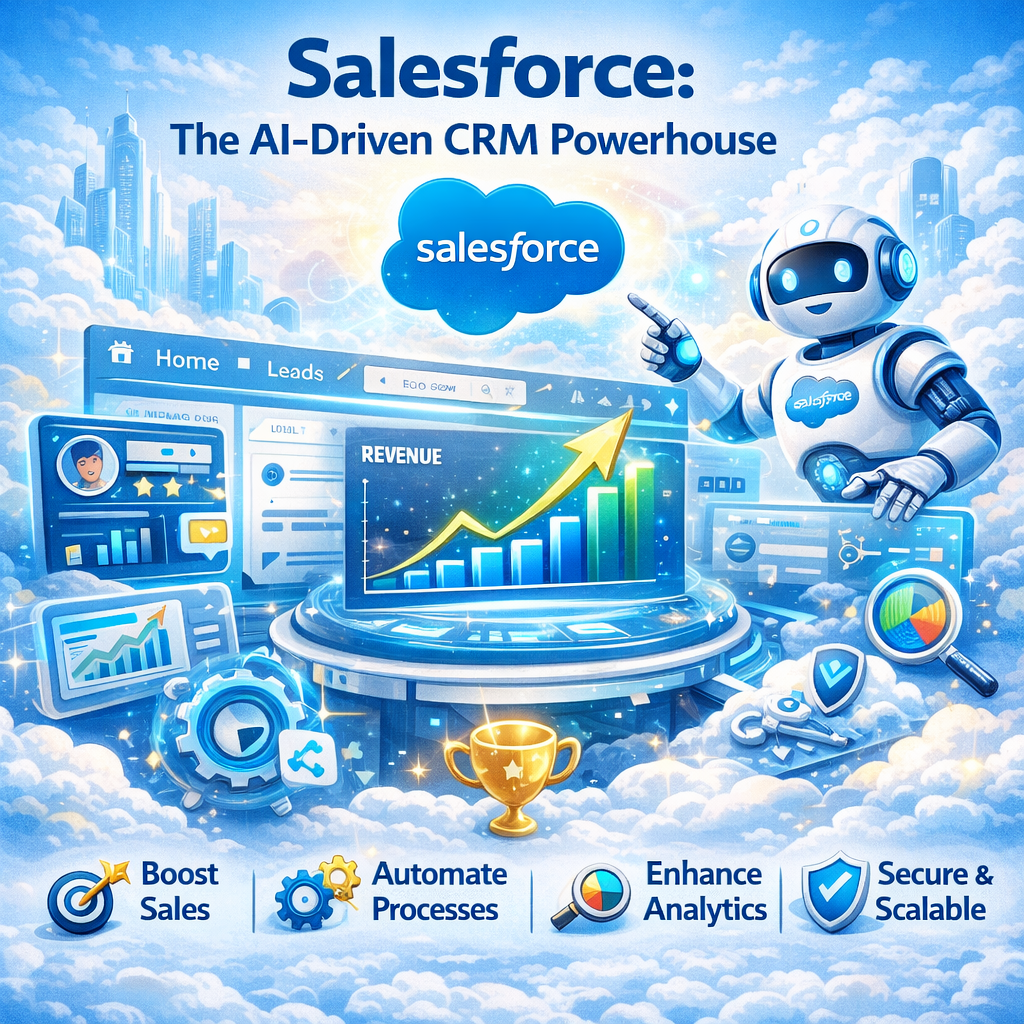
For example, AI assistants in platforms like Salesforce can analyze customer data and suggest next steps for sales teams.
Similarly, productivity tools from Microsoft now include AI-powered assistants that help users to create documents and analyze spreadsheets.
These assistants reduce the time required to complete complex tasks.
Automation Beyond Workflows

Traditional automation relied on predefined rules. Generative AI introduces adaptive automation that can respond to changing conditions.
Examples include:
- Automatically generating email responses
- Creating marketing content
- Summarizing meetings
- Predicting customer behavior
- Generating reports
This shift is similar to automation trends discussed in 5 Best Email Marketing Tools for High Conversion Rates, where AI is increasingly used to optimize campaigns.
Generative AI allows software to respond intelligently rather than mechanically.
AI in Customer Relationship Management
Customer relationship management platforms are among the earliest adopters of generative AI.
AI-powered CRM systems can now:
- Draft emails
- Summarize customer interactions
- Predict sales outcomes
- Generate reports
- Suggest follow-ups
Platforms like HubSpot and Salesforce are integrating AI features directly into their interfaces.
These tools reduce administrative work and allow sales teams to focus on customer relationships.
AI in Content Creation
Generative AI has significantly impacted content creation tools.
SaaS platforms can now generate:
- Blog posts
- Marketing copy
- Social media content
- Product descriptions
- Emails
AI enables content production without traditional resources. Content generation is becoming a standard feature across manySaaS platforms. Video generation is just one piece of the puzzle; see the bigger picture of how [AI is transforming SaaS] in every industry.
AI in Data Analysis
Data analysis has traditionally required specialized skills. Generative AI is making analytics more accessible.
AI-powered analytics tools can:
- Identify trends
- Generate summaries
- Create visualizations
- Answer questions
- Provide insight
Platforms like Google are integrating AI into analytics tools to simplify data interpretation.
Users can now ask questions in plain language and receive detailed responses.
Personalization in SaaS
Generative AI enables software to adapt to individual users.
Personalization may include:
- Custom dashboards
- Recommended features
- Suggested actions
- Tailored workflows
- Personalized reports
This approach improves usability and efficiency. Instead of learning software, users now rely on software that adapts to them.
Reduced Learning Curves
One of the biggest barriers to SaaS adoption has been complexity. Generative AI reduces this barrier by enabling natural language interactions.
Users can now:
- Ask questions
- Request actions
- Generate content
- Create reports
This makes software accessible to non-technical users.
As discussed in Best Learning Management Systems (LMS) for Online Course Creators, ease of use is a critical factor in software adoption.
Generative AI improves usability across all SaaS categories.
Integration with Existing Tools

Generative AI works best when integrated with existing systems.
Modern SaaS platforms integrate with:
- CRMs
- Accounting tools
- Communication platforms
- Marketing tools
- Project management systems
This integration allows AI to access relevant data and provide meaningful insights.
Connected systems create more powerful AI capabilities.
Benefits of Generative AI in SaaS
Increased Productivity
AI reduces manual work.
Faster Workflows
Tasks can be completed more quickly.
Better Insights
AI identifies patterns and trends.
Improved Accuracy
Automation reduces errors.
Enhanced User Experience
AI simplifies software interaction, and these benefits are driving widespread adoption.
Challenges of AI in SaaS
Despite its advantages, generative AI presents challenges.
Data Privacy
AI systems require access to data. Organizations must ensure that data remains secure.
Accuracy
AI-generated outputs may require review.
Costs
AI features may increase subscription prices.
Integration Complexity
AI systems require proper configuration.
Training Requirements
Users must learn how to interact with AI tools. These challenges highlight the importance of careful implementation.
The Role of AI Providers
Many SaaS platforms rely on third-party AI providers. Companies like OpenAI provide models that power AI features across multiple platforms.
This approach allows SaaS companies to integrate AI without developing their own systems. The result is faster innovation and broader adoption.
The Rise of AI-Native SaaS
Some SaaS platforms are being built specifically for AI-first workflows.
AI-native SaaS platforms prioritize:
- Automation
- Natural language interfaces
- Real-time insights
- Adaptive workflows
- Intelligent recommendations
These platforms represent the next stage of SaaS evolution.
The Changing Role of Users
Generative AI is changing how users interact with software.
Instead of:
- Clicking through menus
- Configuring settings
- Building reports
Users can:
- Ask questions
- Request outputs
- Generate content
- Automate tasks
This shift transforms software from a tool into an assistant.
Business Implications
Generative AI is reshaping business operations.
Organizations can:
- Reduce manual work
- Improve efficiency
- Scale faster
- Make better decisions
- Improve customer experiences
These advantages are driving rapid adoption.
The Future of SaaS
Generative AI is expected to continue evolving.
Future developments may include:
- Fully automated workflows
- Advanced analytics
- Real-time insights
- Predictive systems
- Autonomous software
These developments will further transform SaaS platforms.
Final Verdict
Generative AI is redefining the SaaS landscape in 2026. Platforms are evolving from static tools into intelligent systems capable of generating content, analyzing data, and assisting users in real time.
Companies like Microsoft, Salesforce, and Google are integrating AI into their platforms, while AI providers like OpenAI are enabling new capabilities across the industry.
For businesses, generative AI offers significant advantages in productivity and efficiency. However, successful adoption requires careful planning and thoughtful implementation.
SaaS has always been about accessibility and scalability. With the addition of generative AI, it is becoming more intelligent and adaptive than ever before.
The future of SaaS is not just cloud-based software. It is software that understands, assists, and evolves alongside its users.
FAQs:
1. What is Generative AI in SaaS?
Generative AI in SaaS refers to artificial intelligence systems that can create content, generate code, automate workflows, and produce insights directly within cloud-based software platforms. These capabilities are now embedded into many modern SaaS tools to improve productivity and decision-making.
2. How is Generative AI different from traditional SaaS automation?
Traditional SaaS automation relies on predefined rules and workflows, while generative AI can analyze data, understand context, and generate new content or recommendations dynamically. This allows software to adapt to user needs instead of following only fixed instructions.
3. Which industries benefit the most from AI-powered SaaS?
Industries such as healthcare, finance, marketing, customer service, and software development are seeing the greatest impact. AI-powered SaaS tools help automate documentation, analyze customer behavior, and generate insights that improve operational efficiency.
4. Does Generative AI reduce the need for human workers in SaaS environments?
Generative AI is more commonly used to augment human work rather than replace it. Professionals still provide oversight, strategic thinking, and decision-making, while AI handles repetitive or time-consuming tasks.
5. Is Generative AI in SaaS secure for sensitive data?
Most enterprise SaaS providers implement encryption, access controls, and compliance frameworks to protect data. However, organizations must still evaluate vendors carefully and follow internal security policies when adopting AI-powered tools.
6. How does Generative AI improve productivity in SaaS platforms?
Generative AI can automate content creation, summarize reports, generate code, and assist with customer interactions. This reduces manual workload and allows teams to focus on higher-value tasks.
7. Will all SaaS platforms include Generative AI in the future?
Most major SaaS platforms are expected to integrate generative AI features as part of their core offerings. AI capabilities are quickly becoming a standard feature rather than a premium add-on.
8. What are the main challenges of adopting AI-powered SaaS?
Key challenges include data privacy concerns, implementation costs, integration with existing systems, and the need for employee training. Organizations must plan carefully to ensure successful adoption.
9. How does Generative AI affect SaaS pricing models?
Many SaaS vendors are introducing usage-based pricing for AI features, particularly those involving large-scale data processing. This can make costs more flexible but sometimes less predictable.
10. What skills are important for working with AI-powered SaaS tools?
Skills such as data literacy, prompt writing, workflow automation, and basic AI understanding are becoming increasingly valuable. Professionals who can effectively use AI tools will have a competitive advantage in many industries.