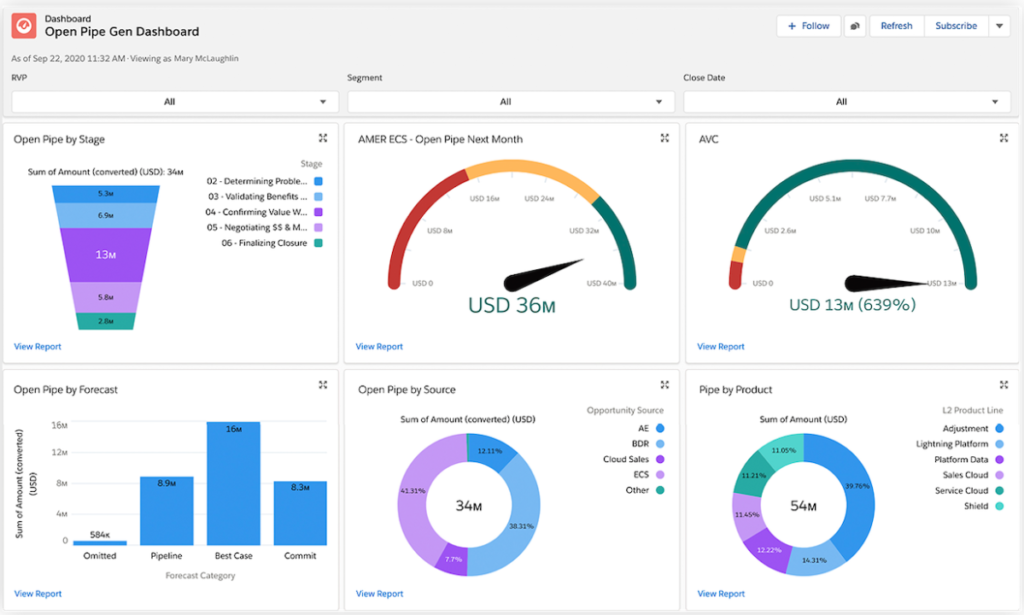

Traditional CRMs were essentially digital databases, responsible for storing customer information, deal stages, and communication history. While useful, they required significant manual input and offered limited strategic guidance.
Today’s AI-driven CRMs operate very differently. They do not just store data, but they also interpret it, learn from it, and act on it.
Modern AI-powered CRMs can:
- Predict which leads are most likely to convert
- Automatically prioritize deals based on behavior and engagement
- Generate and optimize outreach sequences
- Provide real-time recommendations for next actions
- Forecast revenue with increasing precision
This shift mirrors broader SaaS trends, where generative AI and predictive analytics are becoming foundational to business software. For sales teams, the impact is clear: less time spent on administrative tasks and more time focused on closing high-value deals.
How We Evaluated These CRMs
To ensure a fair and practical comparison, each CRM on this list was evaluated using five key criteria:
1. AI Capabilities
We examined how effectively each platform uses AI, whether through predictive lead scoring, automation, forecasting, or behavioral insights.
2. Ease of Use
A powerful CRM is only valuable if teams can adopt it quickly. We prioritized platforms with intuitive interfaces and minimal learning curves.
3. Integration Ecosystem
Modern sales stacks rely on multiple tools. We assessed how well each CRM integrates with marketing, communication, and productivity platforms.
4. Scalability
From startups to enterprises, scalability is critical. We evaluated how each CRM performs as teams grow.
5. Value for Money
Pricing relative to features and ROI was a major consideration, especially for growing organizations.
1. Zoho CRM; Best All-in-One AI CRM
Overview
Zoho CRM continues to dominate the AI CRM landscape by offering a comprehensive ecosystem powered by its intelligent assistant, Zia. Unlike many competitors, Zoho combines advanced AI capabilities with a fully integrated suite of business tools.
Key AI Features
- Predictive lead scoring based on historical data
- AI-driven sales forecasting
- Workflow automation across departments
- Conversational AI assistant (Zia)
- Anomaly detection for unusual sales patterns
Strengths
Zoho’s biggest advantage lies in its ecosystem. Sales, marketing, customer support, and analytics tools all operate within a unified environment. This creates a single source of truth, enabling AI to deliver more accurate insights and recommendations.
Additionally, Zoho’s AI continuously learns from user behavior, improving its predictive accuracy over time.
Limitations
The platform’s depth can be overwhelming for smaller teams or beginners. Implementation and onboarding may require additional time and training.
Best For
Mid-sized to enterprise organizations looking for a scalable, all-in-one CRM with deep AI capabilities.
2. HubSpot CRM; Best for Marketing + Sales Alignment

Overview
HubSpot CRM has evolved into one of the most user-friendly AI-powered platforms on the market. Its strength lies in seamlessly aligning marketing, sales, and customer success teams.
Key AI Features
- AI-powered email generation and personalization
- Predictive lead scoring
- Automated deal tracking
- Chatbots and conversational AI
- Content recommendations for outreach
Strengths
HubSpot excels in usability. Its clean interface and intuitive workflows make it accessible even for non-technical users. The platform’s AI tools are embedded naturally into daily workflows, reducing friction and increasing adoption.
Another major advantage is its inbound marketing ecosystem, which allows businesses to attract, nurture, and convert leads within a single platform.
Limitations
The base CRM is free, but advanced AI features and automation tools can become expensive as teams scale.
Best For
Companies that rely heavily on inbound marketing and want tight alignment between marketing and sales functions.
3. Salesforce: Best Enterprise AI CRM
Overview
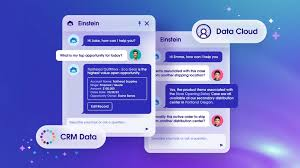
Salesforce remains the gold standard for enterprise CRM solutions. Its AI layer, Einstein, delivers some of the most advanced predictive analytics available today.
Key AI Features
- Einstein AI for predictive insights
- Advanced opportunity scoring
- Automated data entry and activity tracking
- Deep sales forecasting models
- Custom AI-driven workflows
Strengths
Salesforce offers unmatched customization and scalability. Large organizations with complex sales cycles benefit from its ability to tailor workflows, dashboards, and automation to highly specific needs.
Its AI capabilities are particularly strong in large datasets, where predictive models become more accurate and impactful.
Limitations
- High implementation and licensing costs
- Requires technical expertise or dedicated CRM teams
- Longer onboarding timelines
Best For
Large enterprises with complex workflows and the resources to fully leverage advanced AI capabilities.
4. Pipedrive: Best for Sales Simplicity with AI

Overview
Pipedrive focuses on simplicity and efficiency. It combines visual pipeline management with practical AI features designed to help sales teams stay focused on closing deals.
Key AI Features
- AI sales assistant with actionable insights
- Smart activity and follow-up recommendations
- Revenue forecasting tools
- Workflow automation
Strengths
Pipedrive’s intuitive interface is one of its biggest advantages. Sales teams can quickly visualize their pipelines, track deals, and take action without navigating complex menus.
Its AI assistant provides straightforward recommendations, making it ideal for teams that want guidance without complexity.
Limitations
While effective, its AI capabilities are not as advanced as enterprise platforms like Salesforce or Zoho.
Best For
Small to mid-sized sales teams that prioritize speed, usability, and quick adoption.
5. Freshsales; Best for AI-Driven Engagement
Overview
Freshsales, developed by Freshworks, is a powerful CRM designed around customer engagement. Its AI engine, Freddy, focuses on improving communication and relationship management.
Key AI Features
- Freddy AI for lead scoring and insights
- Email tracking and engagement analytics
- Smart workflows and automation
- Built-in phone, email, and chat tools
Strengths
Freshsales stands out by integrating communication tools directly into the CRM. This reduces reliance on third-party apps and creates a more streamlined workflow for sales teams.
Its AI also provides actionable insights into customer engagement, helping teams optimize their outreach strategies.
Limitations
The ecosystem is not as extensive as platforms like Zoho or Salesforce, which may limit integrations for some businesses.
Best For
It is best for Sales teams that rely heavily on communication, emails, calls, and customer interactions to close deals.
Comparative Snapshot
| CRM | Best for | AI Strength | Ease of use | Scalability |
| Zoho CRM | All-in-one Solution | Advanced | Moderate | High |
| HubSpot CRM | Marketing+ Sales | Strong | High | Medium |
| Salesforce | Enterprise | Very advanced | Low | Very high |
| Pipedrive | Simplicity | Moderate | Very high | Medium |
| FreshSales | Engagement | Strong | High | Medium |
Key Trends in AI-Powered CRM (2026)
The key trends that everyone will follow up on in 2026 are as follows;
1. Predictive Sales is the New Standard
Sales teams are no longer reacting to customer behavior—they’re anticipating it. AI models analyze historical data, engagement patterns, and intent signals to guide decision-making.
2. Automation is Replacing Manual Work
Tasks like data entry, follow-ups, and lead prioritization are increasingly automated. This not only improves efficiency but also reduces human error and inconsistency.
3. Integrated Ecosystems Are Winning
Standalone tools are losing relevance. Businesses are shifting toward unified platforms that combine sales, marketing, and customer support into a single system.
4. AI is Becoming More Accessible
What was once limited to enterprise platforms is now available to small and mid-sized teams. User-friendly AI tools are democratizing advanced sales capabilities.
How to Choose the Right AI CRM
Choosing the right CRM depends on your team size, sales strategy, and growth plans.
Choose Zoho CRM if:
- You want a complete business ecosystem
- You need advanced AI insights
- You plan to scale aggressively
Choose HubSpot CRM if:
- You prioritize ease of use
- Your strategy relies on inbound marketing
- You want quick implementation
Choose Salesforce if:
- You run a large enterprise
- You need deep customization
- You require advanced analytics
Choose Pipedrive if:
- You want simplicity and speed
- Your team is sales-focused
- You prefer a visual pipeline approach
Choose Freshsales if:
- You need built-in communication tools
- Customer engagement is your priority
- You want an all-in-one engagement platform
Final Verdict
In 2026, AI is no longer a competitive advantage in CRM, it is a baseline expectation. Every serious sales platform now incorporates some level of automation, predictive analytics, and intelligent insights.
The real differentiator lies in how well a CRM aligns with your team’s workflow and business goals.
- Most powerful overall: Zoho CRM
- Best for ease of use: HubSpot CRM
- Best for enterprise: Salesforce
- Best for simplicity: Pipedrive
- Best for engagement: Freshsales
For SaaSReviewer.io readers, the takeaway is clear: the future of sales belongs to teams that leverage AI not just as a tool, but as a strategic partner.
The right CRM would not just organize your pipeline; it would actively help you close it.
Frequently Asked Questions (FAQs)
1. What is an AI-powered CRM?
An AI-powered CRM is a customer relationship management platform that uses artificial intelligence to automate tasks, analyze data, and provide predictive insights. Tools like Zoho CRM and Salesforce use AI to prioritize leads, forecast sales, and recommend next actions, helping sales teams work more efficiently.
2. How do AI CRMs improve lead management?
AI CRMs enhance lead management by:
- Automatically scoring and prioritizing leads
- Predicting conversion probability
- Recommending follow-ups
- Reducing manual data entry
Platforms such as HubSpot CRM and Freshsales excel in automating these processes, allowing teams to focus on closing deals rather than managing data.
3. Which AI CRM is best for small businesses?
For small businesses, Pipedrive and HubSpot CRM are strong options. Pipedrive offers simplicity and quick setup, while HubSpot provides a user-friendly interface with powerful AI features and a free tier to get started.
4. What is the most advanced AI CRM in 2026?
Salesforce is widely considered the most advanced AI CRM due to its Einstein AI capabilities, deep analytics, and enterprise-level customization. However, Zoho CRM is a strong competitor, offering powerful AI at a more affordable price.
5. Are AI-powered CRMs expensive?
Pricing varies significantly. Zoho CRM and Freshsales are generally more affordable, while Salesforce can be expensive, especially for enterprise implementations. HubSpot CRM starts free but becomes costly as you scale features.
6. Do AI CRMs require technical expertise to use?
Not always. Platforms like HubSpot CRM and Pipedrive are designed for non-technical users. However, more advanced systems like Salesforce may require technical teams or consultants for setup and customization.
7. Can AI CRMs automate the entire sales pipeline?
AI CRMs can automate a large portion of the pipeline, including:
- Lead capture
- Follow-ups
- Task reminders
- Email sequences
Tools like Zoho CRM and Freshsales offer robust automation, but human involvement is still essential for relationship-building and closing deals.
8. Which AI CRM is best for enterprise sales teams?
Salesforce is the top choice for enterprise teams due to its scalability, customization, and advanced AI analytics. Zoho CRM is also a strong contender for organizations seeking a more cost-effective solution.
9. How important is AI in CRM selection in 2026?
AI is critical in 2026. It enables:
- Faster decision-making
- Better lead prioritization
- Improved forecasting accuracy
Most modern CRMs, including HubSpot CRM and Pipedrive, now include AI as a core feature rather than an add-on.
10. Can AI CRMs integrate with other SaaS tools?
Yes. Integration is a key strength of modern CRMs. Zoho CRM offers a full ecosystem of business apps, while Salesforce provides one of the largest marketplaces for integrations. HubSpot CRM also supports hundreds of third-party tools.