In 2026, marketing is a greatly different innovation. Mass emails and waiting for responses will be things of the past, as businesses have come to utilize AI-based marketing automation technologies to both create customized sales cycles and produce higher quality leads while achieving increased revenue without large numbers of employees.
Companies that continue to rely on manual methods frequently will find themselves at a disadvantage compared to those who take advantage of automation. Fast-paced, automated organizations will be able to not only generate leads, improve their interaction rates, and grow their campaigns, but also benefit from valuable data. With proper marketing automation software, companies will accomplish the following:
- Convert more leads
- Improve customer experience
- Increase retention
- Scale campaigns faster
- Reduce manual work
- Make smarter decisions with data
Startups, SaaS companies, e-commerce brands, and enterprises now depend on automation for digital growth.
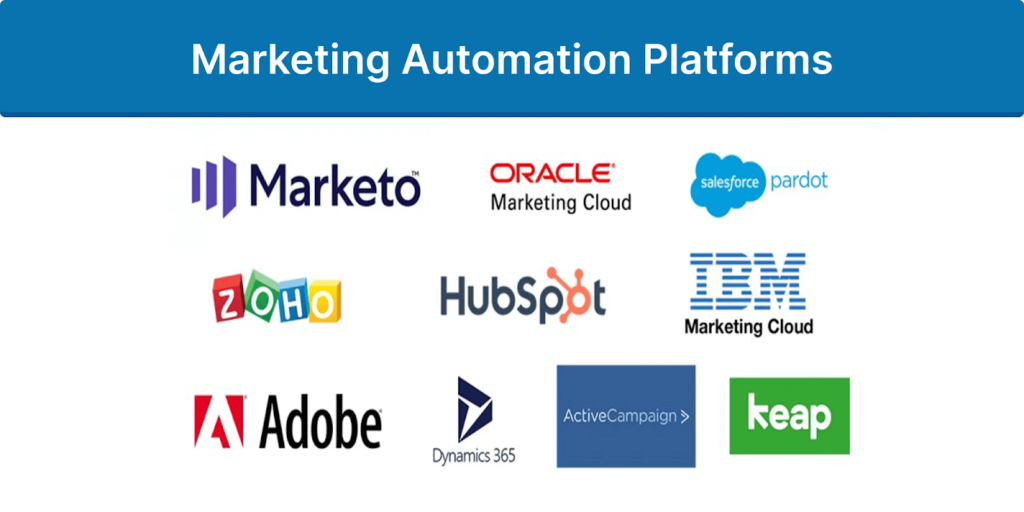
Here are the seven best marketing automation tools in 2026.
Why Marketing Automation Matters More Than Ever?
Every year, customer expectations continue to increase. Customers now expect to receive personalized emails, timely responses, recommendations that are tailored based on their interests, and to have an easy and seamless experience at each touch point across all channels of communication.
Manual marketing is unable to support that type of demand on such a large scale.
Marketing automation programs allow companies to automate their workflow processes, track customer actions, personalize marketing campaigns, and ultimately link their marketing efforts with revenue generation.
Today’s companies are using automation to:
- Automate email campaigns based on customer behaviors
- Recover abandoned shopping carts
- Automatically segment their audiences
- Intelligently score their leads
- Launch campaigns in real time
- Track the entire customer journey
- Align their sales and marketing groups
The introduction of AI into automation programs in 2026 has also transformed the way companies automate their marketing. The new generation of automation tools has dramatically improved how businesses are able to predict customer actions, improve the timing of their campaigns, and suggest actions that should be taken based on actual performance data.
HubSpot ( All-in-One Marketing Automation Platform )
Organizations looking for a comprehensive marketing and CRM platform in 2026 will likely opt for HubSpot.
HubSpot is an all-in-one software that provides email marketing, analytics, CRM management, workflow automation, customer support, and sales features. No more having to rely on multiple platforms to manage your campaigns and customers.
Most businesses like using HubSpot since it is very intuitive. Enterprise platforms sometimes require technical skills and longer configuration periods. HubSpot allows you to automate your processes without a complicated process.
You can build automated workflows depending on customer behavior. You can send automated emails based on website activity, score leads based on their interaction with the site, track conversions, and communicate with personalized messages throughout the buyer’s journey.
In addition, its AI-powered reporting feature helps you recognize high-performing campaigns. Sales and marketing teams have access to shared data in real-time.
Key Features
- Advanced workflow automation
- AI-powered analytics
- Integrated CRM system
- Lead scoring and segmentation
- Sales and marketing alignment
- Landing page and form builders
- Customer journey tracking
Pros
- Easy-to-use interface
- Powerful all-in-one platform
- Strong third-party integrations
- Scales well for growth
Cons
- Pricing increases at scale
- Premium plans unlock advanced features
Best For
Startups, SaaS companies, agencies, and growing businesses that want one centralized platform.
ActiveCampaign ( Best for Advanced Email Automation )
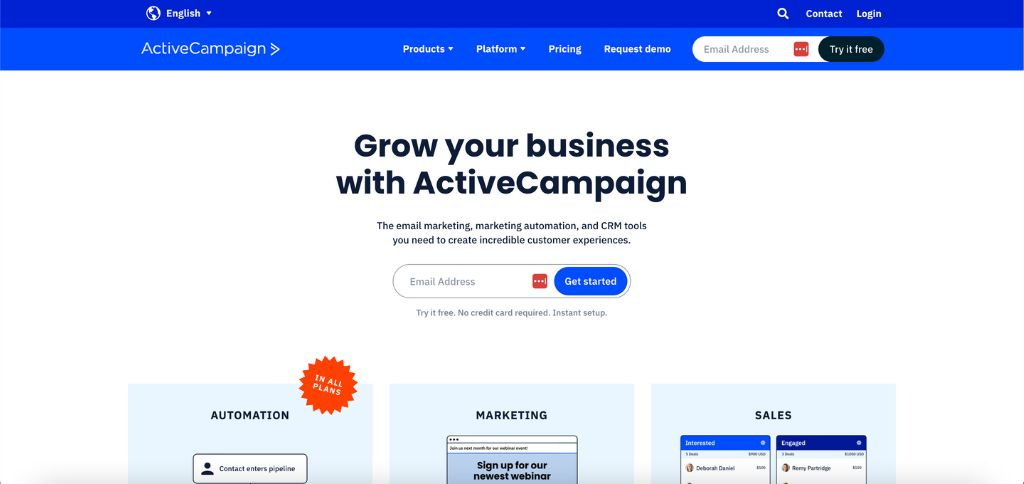
ActiveCampaign has gained immense popularity due to its superior email automation capabilities.
ActiveCampaign is highly regarded for its behavioral automation and personalization capabilities. Companies can set up custom email campaigns based on customers’ behaviors, past purchases, website interactions, etc.
Basic email marketing software is not that versatile. With ActiveCampaign, marketers have more automation capabilities than basic software without making things too complicated.
CRM integration helps link sales activities to marketing efforts. The software helps businesses nurture their leads, send follow-up emails, and focus on potential customers.
Personalization capability is among the most important advantages of ActiveCampaign. Companies can personalize their content according to customers’ behavior, which usually results in higher conversion rates.
Key Features
- Behavioral email automation
- Dynamic content personalization
- Advanced segmentation
- CRM integration
- SMS marketing automation
- Customer journey mapping
- Predictive sending tools
Pros
- Powerful automation builder
- Strong personalization features
- Reliable email deliverability
- Good balance between pricing and features
Cons
- Beginners may face a learning curve
- Dashboard may feel crowded at first
Best For
Businesses that focus heavily on email marketing, lead nurturing, and customer journey automation.
Mailchimp ( Beginner-Friendly Marketing Automation Tool )
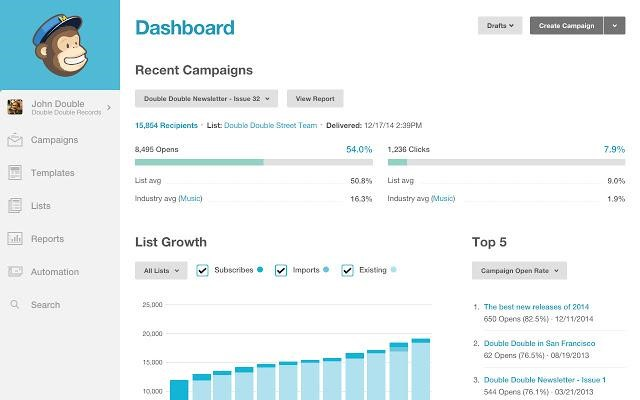
Mailchimp has evolved into more than simply a newsletter service provider. It remains one of the easiest ways for small businesses to automate their marketing.
The MailChimp platform has a goal of simplicity, but it does not sacrifice automation capabilities in achieving this goal. Small business owners can quickly and easily set up automated email campaigns as well as manage audience segmentation and customer journeys through Mailchimp.
With the addition of artificial intelligence-driven recommendations for subject lines, sending times, and audience insights to the MailChimp platform, small businesses now have the tools they need to compete with larger businesses using the same platform.
There are several reasons why most online businesses have chosen Mailchimp over other solutions; specifically, Mailchimp integrates well with eCommerce, website builder, and CRM software platforms.
Although Mailchimp does not possess the same level of sophistication as enterprise solutions such as HubSpot or Salesforce, it provides a high level of value while also being simple to learn, making it highly desirable.
Key Features
- Automated email sequences
- Audience segmentation
- AI subject line optimization
- E-commerce integrations
- Marketing analytics
- Landing page creation
- Customer behavior insights
Pros
- Very beginner-friendly
- Affordable starting plans
- Simple campaign setup
- Strong template library
Cons
- Limited advanced automation
- Pricing rises as contacts grow
Best For
Small businesses, startups, freelancers, and beginners who want simple automation tools.
Marketo ( Enterprise Marketing Automation Platform )
Marketo, which is driven by Adobe, remains the leader in enterprise marketing automation in 2026.
Big companies prefer Marketo since it caters to complicated customer journeys, lead scoring, account-based marketing, and automation.
The tool is particularly effective in B2B cases. Organizations dealing with prolonged sales processes involving various decision-makers usually utilize Marketo.
Marketo assists users in tracking leads through many points of contact and delivering personalized interactions in large quantities.
The platform’s analytical capabilities allow marketers to evaluate campaign effectiveness and ROI. Marketers get to know the channels and campaigns that bring the best results.
Finally, integration with Adobe software and enterprise-grade CRMs is another advantage of the platform, which is useful for big companies with advanced infrastructure.
Key Features
- Enterprise workflow automation
- Advanced lead scoring
- Account-based marketing tools
- Multi-channel campaign management
- Deep analytics and attribution
- CRM integrations
- AI-powered engagement insights
Pros
- Highly scalable
- Strong B2B capabilities
- Advanced reporting tools
- Excellent enterprise integrations
Cons
- Expensive for smaller businesses
- Requires technical expertise
- The setup process takes time
Best For
Large B2B companies and enterprises with complex marketing operations.
Klaviyo ( Automation Tool for E-Commerce )
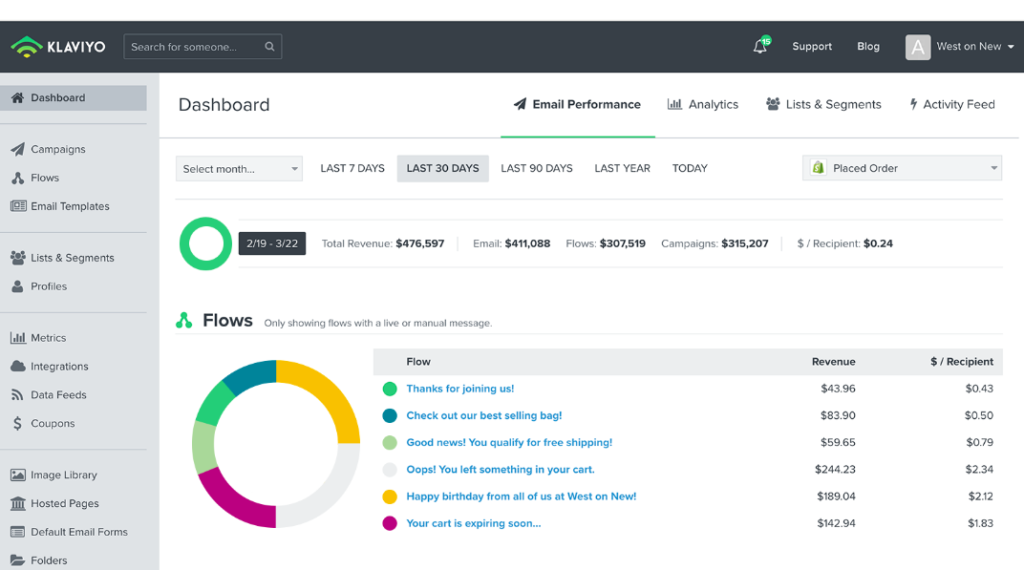
Klaviyo allows e-commerce businesses to create automated email campaigns, which can help businesses earn additional revenue. Automating these tasks by leveraging Klaviyo allows e-commerce sites to use cart abandonment follow-up emails, provide information about purchases, suggest products, and build brand loyalty for customers.
Klaviyo integrates seamlessly with e-commerce development platforms such as WooCommerce and Shopify to help businesses leverage their customer data in real-time to develop personalized campaigns.
Klaviyo has a robust reporting system that allows businesses to track exactly how much revenue has been generated by each email flow or automation.
Klaviyo also provides predictive analytics so that businesses can identify their highest-value customers and grow the lifetime value of those customers.
Key Features
- Abandoned cart automation
- Post-purchase workflows
- Predictive analytics
- SMS and email automation
- Customer lifetime value tracking
- Product recommendation automation
- Revenue attribution reporting
Pros
- Excellent for e-commerce brands
- Powerful segmentation tools
- Strong revenue tracking
- Deep Shopify integration
Cons
- Pricing increases as contacts grow
- Less useful for non-e-commerce businesses
Best For
E-commerce brands, Shopify stores, and online retailers that focus on retention and revenue growth.
Salesforce Marketing Cloud ( Omnichannel Enterprise Marketing )
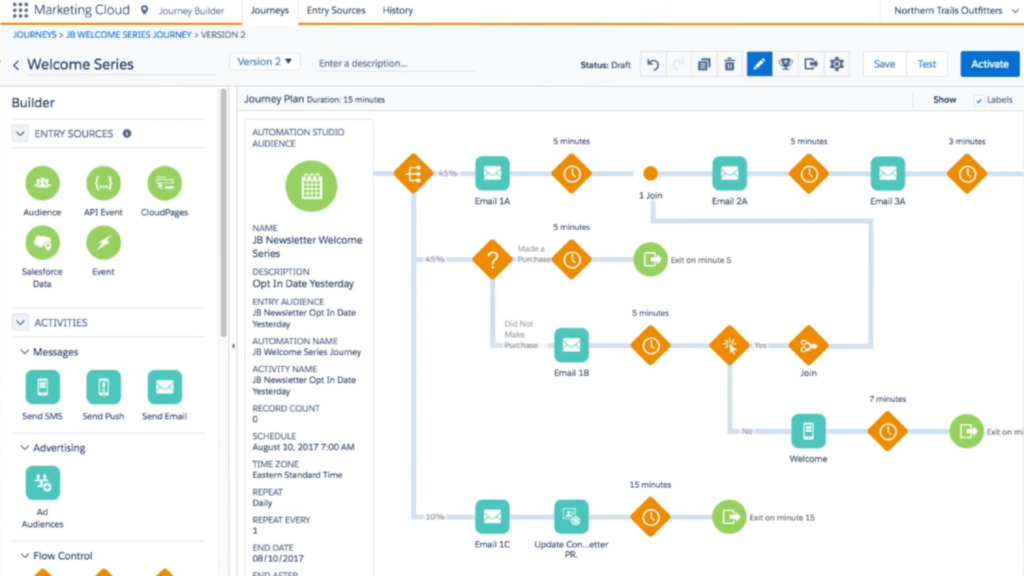
Salesforce Marketing Cloud is ideal for companies dealing with big customer databases using multiple channels.
It enables organizations to automate email campaigns, SMS campaigns, push notifications, social media engagements, and customer experiences using just one platform.
The main advantage of this software lies in its capability to unify data. It enables companies to integrate customer interactions from various touchpoints and create customized experiences throughout the customer journey.
In addition, Salesforce utilizes cutting-edge artificial intelligence and predictive analytics to enhance targeting and optimize campaign timing and customer behavior predictions.
Big enterprises use Salesforce Marketing Cloud due to its scalability and integration capabilities.
Key Features
- Omnichannel automation
- AI-powered analytics
- Customer journey orchestration
- SMS and mobile marketing
- Real-time personalization
- Enterprise CRM integration
- Advanced audience segmentation
Pros
- Powerful enterprise ecosystem
- Advanced personalization
- Strong analytics and reporting
- Excellent scalability
Cons
- High implementation costs
- Complex setup process
- Requires experienced teams
Best For
Large enterprises that manage global multi-channel marketing campaigns.
Zapier ( Workflow Automation Connector )
Not all companies require an enterprise-level marketing platform. For most of them, just better integrations among their software would suffice.
Zapier provides such integrations using its no-code workflow automation.
Zapier allows businesses to integrate their CRMs, email marketing platforms, project management tools, analytics tools, customer service software, and social media tools. Integration of automated workflows eliminates manual processes.
A company may automatically transfer Facebook Ad leads to the CRM, notify via Slack of a sale, or create a follow-up task for each customer interaction.
Zapier acts like the spine of today’s marketing systems.
Key Features
- No-code workflow automation
- Thousands of app integrations
- Multi-step automations
- Automated task triggers
- CRM and email integrations
- Cross-platform data synchronization
Pros
- Very flexible
- Easy automation setup
- Reduces repetitive work
- Supports thousands of tools
Cons
- Complex workflows may become costly
- Limited advanced analytics
Best For
Businesses that build custom automation systems across multiple platforms.
How to Choose the Right Marketing Automation Tool?
You should evaluate several factors before you choose a platform:
- Company size
- Marketing budget
- Primary marketing channels
- CRM requirements
- Level of technical expertise
- Complexity of automation
- Need for scalability
A startup typically has different infrastructure needs than an international organization.
Be careful; the highest-priced solution may not be your best. The right solution is based on your objectives, process flows, and how you anticipate future growth.
Final Thoughts
In 2026, marketing automation will have become an absolute necessity for every business. Those that are able to automate their marketing processes successfully generate more leads and create better customer experiences than those still relying on manual processes or outdated software, while spending less time on manual processes and being able to scale up faster than their competitors, who continue to struggle with inefficient systems.
When done correctly, marketing automation provides the foundation for long-term growth within an organization.
The HubSpot platform is one of the best all-in-one solutions available; ActiveCampaign is the leader in email automation; Mailchimp is the best entry-level platform; Marketo and Salesforce dominate enterprise marketing; Klaviyo drives growth in eCommerce; and Zapier allows you to connect all of your online marketing tools together.
The companies that are successful in the future will create automated systems that will allow them to outgrow their competition.
Companies that do not automate their marketing processes successfully will not only find it harder to grow quickly but will also struggle with engaging customers and lose their competitive edge in an increasingly AI-driven marketing landscape.