
Your Ultimate Comparison Guide to Choosing the Best CRM in 2026
In today’s competitive business landscape, customer relationship management (CRM) software is essential. Whether you are a small business owner, solo entrepreneur, or growing startup, a powerful CRM tool helps you:
- Track leads and pipelines
- Automate sales follow-ups
- Improve customer retention
- Centralize communication
- Generate more revenue
And because CRM software for small businesses is one of the highest CPC (cost-per-click) categories for search advertisers, it shows that buyers are actively searching, comparing, and ready to invest in the best CRM systems.
This in-depth comparison will walk you through our top 5 CRM picks for small businesses in 2026, how they differ, who they are best for, and what to consider before you buy.
How We Evaluated These CRM Software Tools
To rank these platforms, we focused on:
Ease of use: Can a small team adopt it quickly?
Features that matter: Contact management, automation, pipeline tracking, reporting, mobile access
Affordability: Budget-friendly pricing without hidden fees
Integrations : Works with email, marketing tools, and payment systems
Scalability: Grows with your business
1. HubSpot CRM – Best Free CRM to Scale With Your Business
Why It’s Our Top Pick
HubSpot CRM remains the gold standard for small business CRM software. Especially if you’re just getting started and want a platform that won’t lock you into expensive plans later.
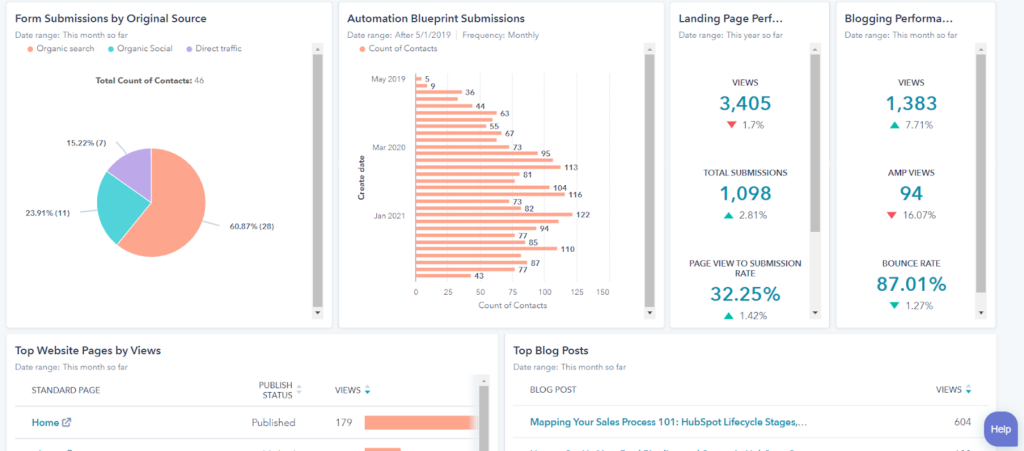
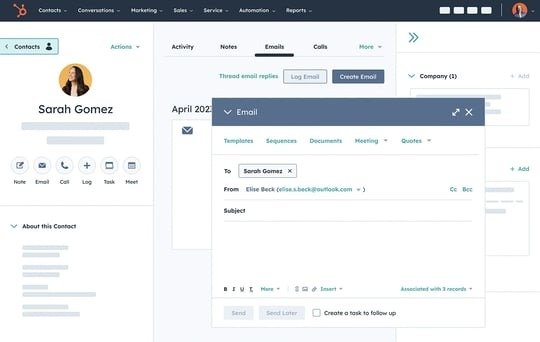
Standout Features
- Best-in-class free plan with no usage limits
- Visual sales pipeline management
- Built-in email tracking & templates
- Contact & company insights
- Integrates with Gmail, Outlook, Shopify, Slack
Pros
- No cost for core CRM functions
- Scales into advanced marketing & sales hubs
- Very intuitive for non-technical users
Cons
- Advanced automation requires paid tiers
- Can feel overwhelming with feature expansion
It is best for small teams and startups that want a powerful CRM without upfront cost
2. Salesforce Essentials – Best for Customization & Enterprise-Grade Power
Why It’s a Top Contender
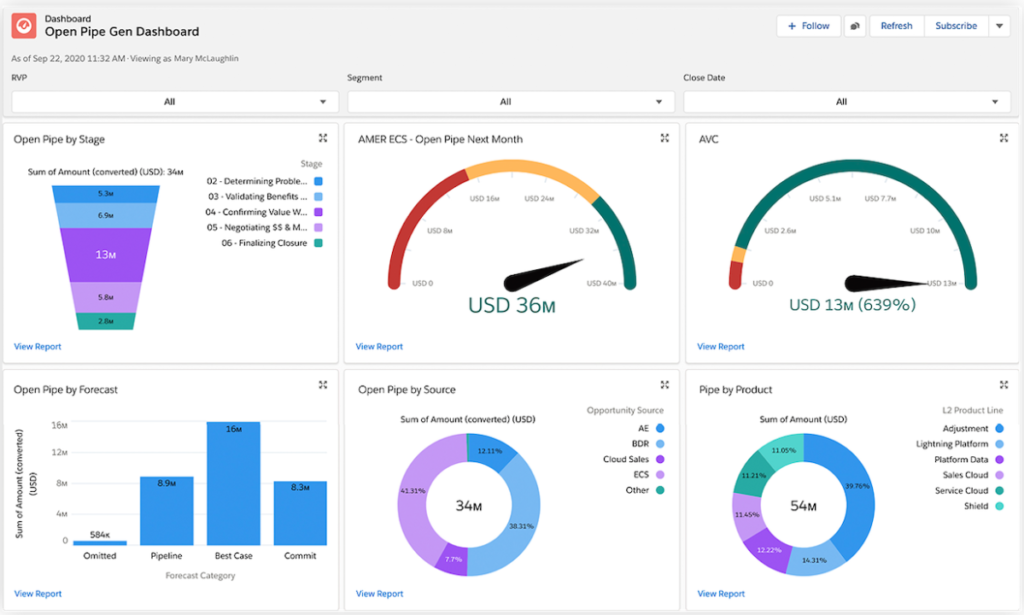
Salesforce is the world’s most widely used CRM, and Salesforce Essentials brings enterprise-class tools to small businesses.
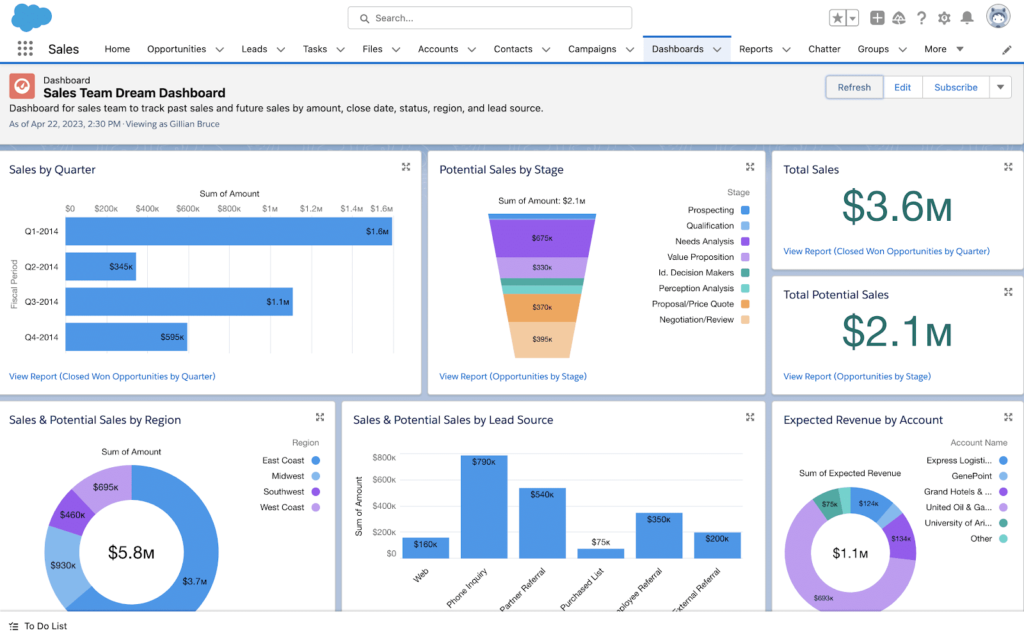
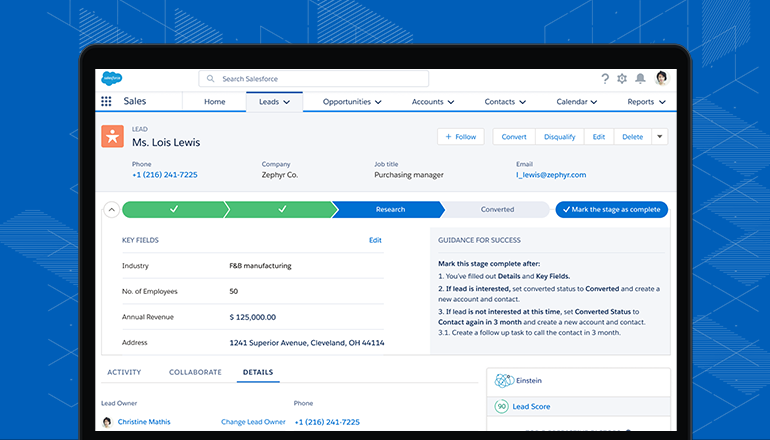
Standout Features
- Fully customizable sales pipeline
- Powerful AI insights (Einstein)
- Robust reporting and analytics
- AppExchange for third-party integrations
Pros
- Extremely scalable
- Deep custom workflows
- Strong partner ecosystem
Cons
- Higher learning curve
- Pricier than most small business CRMs
This is best for small businesses planning aggressive growth or complex sales processes.
3. Zoho CRM – Best Value for Money
Why It’s on Our List
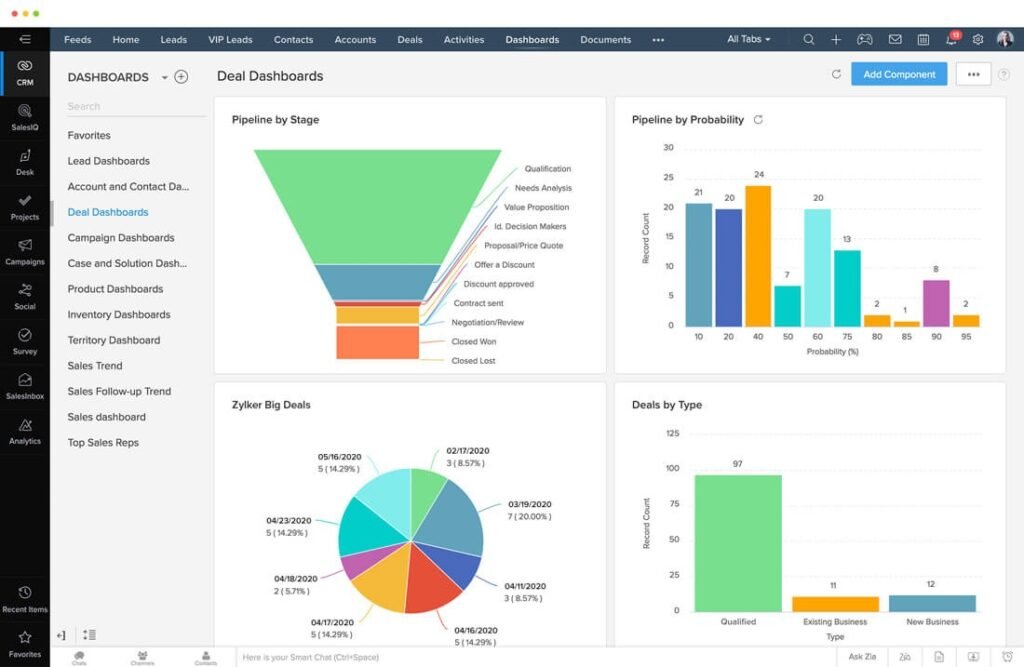
Zoho CRM delivers a professional CRM experience at a highly affordable price. If your budget matters, without sacrificing capability, Zoho is hard to beat.
Standout Features
- Multi-channel support (email, social, chat)
- AI-assisted sales predictions
- Workflow automation
- Sales gamification
Pros
- Competitive pricing
- Flexible customization
- AI features included
Cons
- Can be complex to configure
- UI isn’t as modern as competitors
It is best for budget-conscious small businesses that still need advanced features.
4. Pipedrive – Best CRM for Sales Pipeline Focus
Why It’s Ideal for Some Businesses
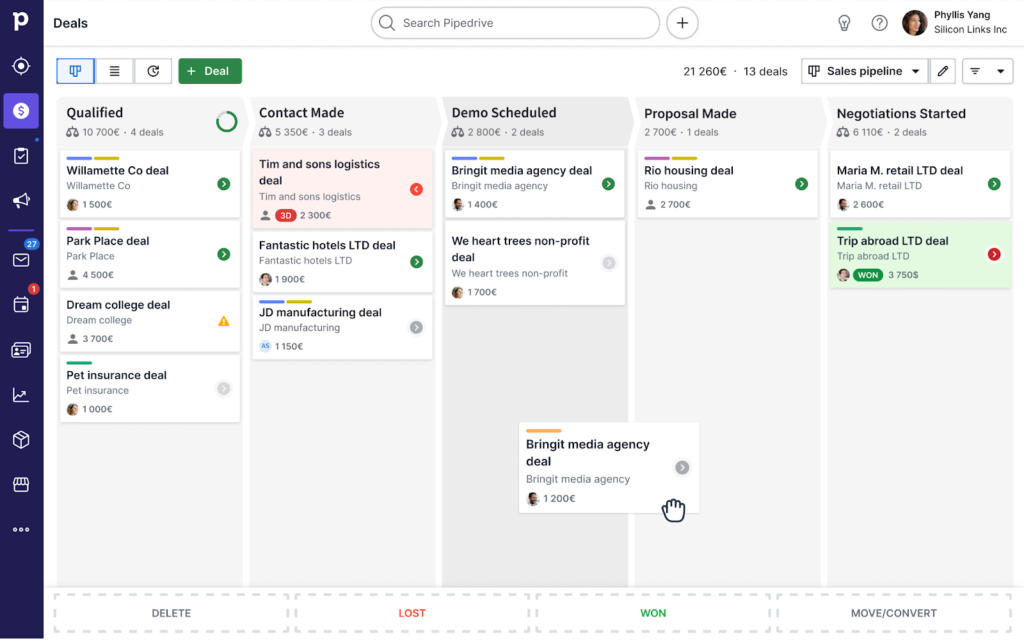
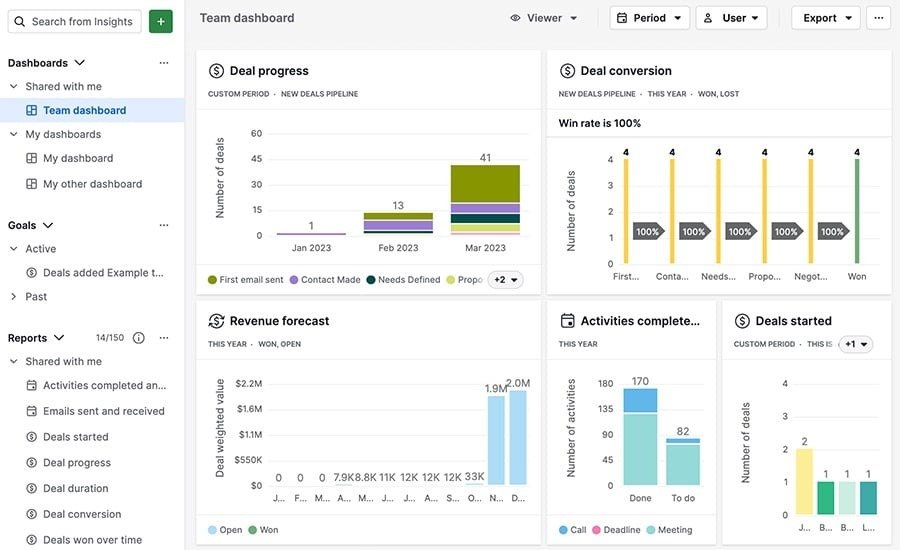
If your sales team thrives on pipeline clarity, Pipedrive delivers a beautifully simple, yet powerful, visual pipeline experience.
Standout Features
- Drag-and-drop pipeline management
- Smart contact and deal insights
- Integrated email marketing
- Custom activity reminders
Pros
- Excellent for direct sales workflows
- Quick onboarding
- Powerful mobile app
Cons
- Fewer marketing automation features
- Not ideal if CRM is deeply tied to marketing
It is best for sales-centric small teams needing pipeline clarity.
5. Freshsales (Freshworks CRM) – Best for Support + Sales in One
Why It’s Great for Small Businesses
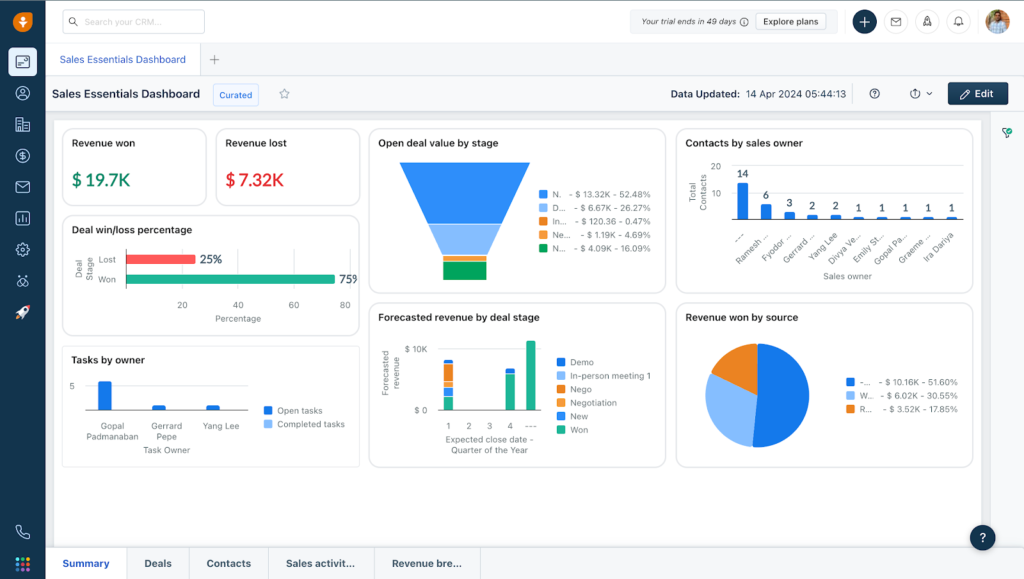
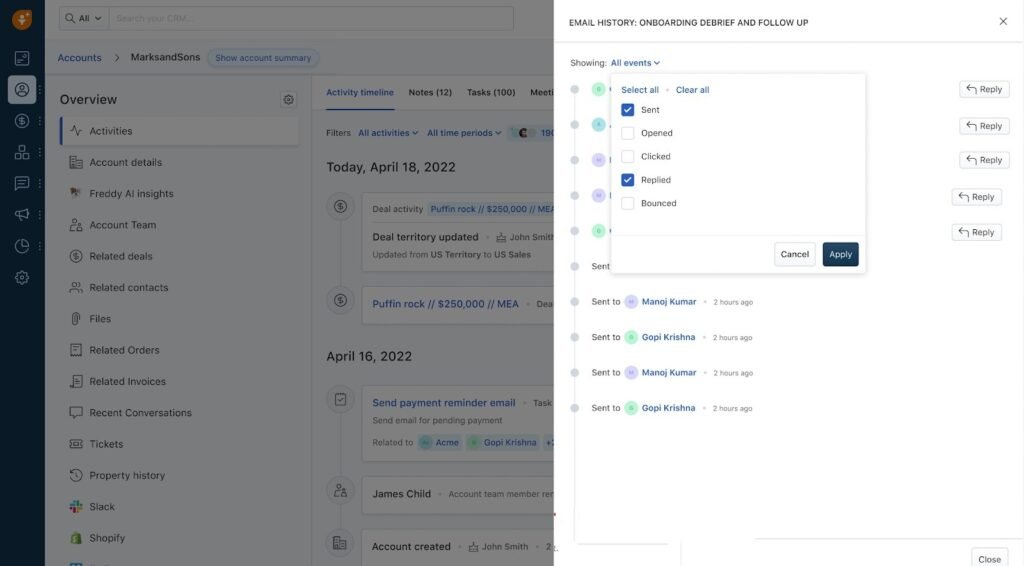
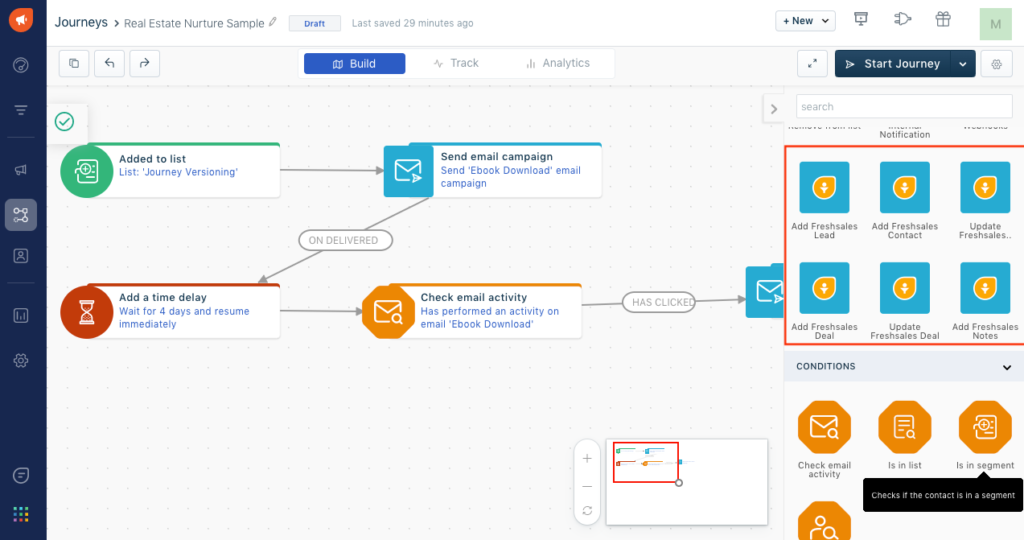
Freshsales blends customer support, sales automation, and CRM into a unified platform.
Standout Features
- AI-driven lead scoring
- Built-in phone and email
- Sales playbooks
- Support ticketing
Pros
- Combines sales + support workflows
- AI insights help prioritize leads
- Great onboarding support
Cons
- Advanced analytics require higher tiers
- Less third-party ecosystem than Salesforce
It is best for businesses that want sales and customer support in one platform.
CRM Comparison at a Glance
| CRM Software | Best for | Starting price | Usage |
| HubSpot CRM | free/overall | free | Ease of use and scalability |
| Salesforce Essentials | Enterprise-style power | paid | Customization and Analytics |
| Zoho CRM | Best value | paid | Budget + features |
| Pipedrive | Sales pipeline focus | paid | Pipeline clarity |
| Flashsales | Sales+Support | paid | AI lead scoring & service |
What to Consider Before Choosing Your CRM
Ease of Use
Even the most expensive CRM is worthless if your team does not adopt it.
Sales vs. Full-Stack Needs
Make sure you need just sales pipeline tools or marketing + support + CRM?
Integrations
Make sure it works with:
- Email platforms
- Marketing automation
- E-commerce systems
- Billing + payments
Pricing Transparency
Watch out for:
- Per-user charges
- Add-on fees
- Automation costs
How to Choose the Right CRM for Your Business
Use this simple checklist while choosing the right CRM:
- Define your goal: Lead tracking, sales forecasting, pipeline management?
- List must-have features: Automation, email sync, reporting?
- Set your budget: Monthly vs annual savings?
- Test with your team: Real data beats demo accounts.
- Check support quality: Training, docs, live help?
The best CRM for your business is not always the “top-ranked” one. It is the one your team actually uses every day.
Final Note
Choosing the right CRM software can be a game-changer for your small business. The right platform reduces manual tasks and boosts productivity, organizes your sales process, and helps you build stronger customer relationships.
But remember: there is no one-size-fits-all CRM. The ideal tool depends on your business size, goals, budget, and team workflows.
HubSpot is unbeatable for beginners and scalability. Salesforce offers enterprise power. Zoho delivers value. Pipedrive sharpens sales focus, and Freshsales unifies sales with support.
Ready to upgrade your CRM and grow your business?
- Start by trying a free plan or trial with one of the tools above.
- Involve your team in the test run.
- Compare workflows, ease of use, and ROI before committing.
Frequently Asked Questions (FAQs)
1. What is the best CRM software for small businesses?
The best CRM software for small businesses depends on your needs.
- HubSpot CRM is best for free and scalable use.
- Salesforce Essentials works well for customization and advanced workflows.
- Zoho CRM offers excellent value for money.
- Pipedrive is ideal for sales pipeline management.
- Freshsales combines sales and customer support tools.
There is no one-size-fits-all solution. The best CRM is the one your team consistently uses.
2. What does CRM software do for a small business?
CRM software for small businesses helps manage customer relationships by:
- Tracking leads and contacts
- Managing sales pipelines
- Automating follow-ups
- Sending email campaigns
- Generating reports and forecasts
- Improving customer retention
It centralizes customer data, so your team can sell smarter and provide better service.
3. Is there a free CRM for small businesses?
Yes. HubSpot CRM offers one of the best free CRM systems available. It includes contact management, deal tracking, and email integration without time limits. Some other CRM platforms also offer free trials or limited free plans.
4. How much does CRM software cost for small businesses?
CRM pricing varies depending on features and users:
- Free plans (limited features)
- $12–$30 per user/month (basic plans)
- $50–$150+ per user/month (advanced features)
Costs increase with automation, analytics, and integrations. Always check per-user pricing before committing.
5. Which CRM is easiest to use for small businesses?
HubSpot CRM and Pipedrive are widely considered the easiest CRM systems for small businesses. They offer intuitive dashboards, drag-and-drop pipelines, and simple onboarding.
Ease of use is critical because adoption determines ROI.
6. What features should a small business look for in CRM software?
When choosing the best CRM system, look for:
- Contact and lead management
- Sales pipeline tracking
- Email integration
- Automation workflows
- Reporting and analytics
- Mobile app access
- Integration with marketing tools
Avoid paying for features you won’t use.
7. What is the difference between CRM and marketing automation?
A CRM system focuses on managing customer data and sales pipelines.
Marketing automation software focuses on email campaigns, lead nurturing, and audience segmentation.
Some platforms, like HubSpot and Freshsales, combine both features.
8. Is Salesforce good for small businesses?
Yes, but it depends on complexity.
Salesforce Essentials offers powerful customization and analytics, but it may have a steeper learning curve compared to simpler CRM tools.
It’s ideal for small businesses planning rapid growth.
9. Can CRM software increase sales?
Yes. A well-implemented sales CRM software improves follow-up consistency, lead tracking, and conversion visibility. Businesses that use CRM effectively often experience higher close rates and improved customer retention.
10. How do I choose the right CRM for my small business?
Follow these steps:
- Define your sales process
- Identify must-have features
- Set your budget
- Test free trials
- Evaluate ease of use and team feedback
The right CRM should improve productivity, not complicate workflows.
Pingback: Salesforce vs. HubSpot: Which CRM is Better in 2026?