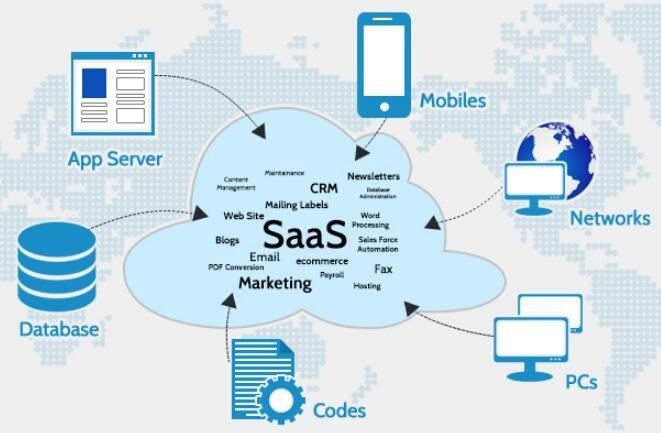
In 2026, software is not just powering businesses; it is the business. From CRM systems to accounting dashboards, project management platforms to AI automation tools, organizations are increasingly dependent on Software-as-a-Service (SaaS) solutions. But this comes with the risk.
Data breaches, ransomware attacks, and misconfigured cloud environments have turned SaaS security into a boardroom priority. For Michael’s project, “Security” is a signature standard.
Why SaaS Security Matters More Than Ever
This article outlines our comprehensive SaaS Security Checklist. It explains the exact framework we use to evaluate software safety before recommending or adopting any platform. Check out our [software testing methodology].
According to global cybersecurity reports, cloud-based attacks have surged dramatically over the past few years. As companies migrate from on-premise infrastructure to SaaS platforms, the shared responsibility model becomes critical.
With SaaS, vendors handle infrastructure security, but customers are responsible for:
- Access control
- Data configuration
- User permissions
- Compliance management
Ignoring these responsibilities can result in:
- Massive data breaches
- Regulatory fines (GDPR, HIPAA violations)
- Loss of customer trust
- Business downtime
That’s why we evaluate every solution against strict cloud security and data protection benchmarks.
Our SaaS Security Evaluation Framework

The following checklist is used to analyze any SaaS tool.
1. Data Encryption Standards
Encryption is the foundation of cybersecurity.
We verify:
Encryption in Transit
- Is TLS 1.2 or TLS 1.3 enforced?
- Are secure HTTPS connections mandatory?
- Are weak cipher suites disabled?
Encryption at Rest
- Is AES-256 encryption used?
- Are backups encrypted?
- Is database encryption applied by default?
Key Management
- Does the provider use Hardware Security Modules (HSMs)?
- Are encryption keys rotated regularly?
- Is customer-managed key (CMK) support available?
If encryption standards are vague or undocumented, it is an immediate red flag.
2. Identity & Access Management (IAM)
Human error is one of the biggest security vulnerabilities. Therefore, access control must be airtight.
We evaluate:
Multi-Factor Authentication (MFA)
- Is MFA mandatory or optional?
- Does it support authenticator apps?
- Are hardware keys supported?
Role-Based Access Control (RBAC)
- Can roles be customized?
- Are permissions granular?
- Is least-privilege enforcement easy?
Single Sign-On (SSO)
- Does it support SAML 2.0?
- Is OAuth integration available?
- Does it integrate with enterprise identity providers?
Zero Trust Security Principles
- Is access verified continuously?
- Are session timeouts enforced?
- Is suspicious login behavior monitored?
Strong identity security dramatically reduces the risk of breach.
3. Compliance & Certifications
Compliance reflects structured security processes.
We require documentation for:
- SOC 2 Type II
- ISO 27001
- GDPR alignment
- HIPAA (if handling health data)
- PCI DSS (for payment processing tools)
If a SaaS vendor claims compliance but cannot provide audit reports, we mark it as non-transparent.
Transparency equals trust.
4. Infrastructure & Cloud Security
We analyze the vendor’s cloud environment:
Hosting Provider
- Is it hosted on reputable providers like AWS, Azure, or Google Cloud?
- Are security configurations publicly documented?
Network Security
- Web Application Firewalls (WAF)
- Intrusion Detection Systems (IDS)
- Intrusion Prevention Systems (IPS)
DDoS Protection
- Is there automated mitigation?
- Are rate-limiting controls enabled?
Segmentation
- Are production and testing environments separated?
- Is tenant data isolated?
A secure SaaS tool must demonstrate hardened cloud infrastructure.
5. Vulnerability Management & Penetration Testing
Security is not static; it requires continuous testing.
We check:
- Frequency of third-party penetration testing
- Automated vulnerability scanning
- Patch management timelines
- Disclosure policies
Questions we ask vendors:
- How quickly are critical vulnerabilities patched?
- Is there a public vulnerability disclosure policy?
- Do they publish security advisories?
A mature vendor treats security testing as ongoing, rather than annual.
6. Data Backup & Disaster Recovery
Downtime can destroy operational continuity.
We evaluate:
Backup Frequency
- Real-time replication?
- Daily incremental backups?
- Off-site storage?
Recovery Time Objective (RTO)
- How fast can systems be restored?
Recovery Point Objective (RPO)
- How much data loss is acceptable?
Business Continuity Planning
- Is there a documented disaster recovery strategy?
- Are failover systems automated?
Without a strong business continuity plan, even secure software can fail under a crisis.
7. Data Privacy & Data Ownership
Security is about protection, and privacy is about rights.
We review:
- Who owns the data?
- Can users export their data easily?
- What happens upon contract termination?
- Is data permanently deleted on request?
We carefully analyze the vendor’s privacy policy and terms of service.
Hidden clauses are unacceptable.
8. Application Security
Modern SaaS tools rely heavily on APIs and web interfaces.
We assess:
- Protection against OWASP Top 10 vulnerabilities
- Secure coding frameworks
- API authentication controls
- Rate limiting
- Input validation
- CSRF protection
- XSS prevention
We also verify if the vendor conducts:
- Static Application Security Testing (SAST)
- Dynamic Application Security Testing (DAST)
Application-layer weaknesses are common entry points for attackers.
9. Logging, Monitoring & Incident Response
Early detection prevents catastrophic damage.
We look for:
- Real-time activity monitoring
- Centralized logging systems
- SIEM integration
- Suspicious activity alerts
- Defined incident response timelines
Questions we ask:
- How quickly are customers notified of breaches?
- Is there a 24/7 security operations center?
- Are forensic reports shared?
A serious vendor has a clearly documented incident response plan.
10. Vendor Transparency & Security Culture
Technology alone isn’t enough.
We evaluate:
- Security leadership structure
- Dedicated CISO presence
- Employee security training programs
- Insider threat controls
- Public security documentation
A company’s security culture often predicts its resilience.
Red Flags We Never Ignore
Certain warning signs immediately reduce a vendor’s rating:
- No public security documentation
- No compliance certifications
- No MFA support
- Poor customer reviews about data loss
- Ambiguous privacy policies
- Lack of breach disclosure history
Security silence is not security strength.
Our Security Scoring Methodology

For Michael’s project, we assign weighted scores across:
- Encryption & Data Protection
- Access Management
- Compliance & Certifications
- Infrastructure Security
- Application Security
- Backup & Recovery
- Transparency
Each category receives a numeric rating. Only platforms that pass our threshold qualify as “Security Approved.”
This ensures consistency and accountability.
The Shared Responsibility Model: What Users Must Still Do
Even the most secure SaaS platform can be compromised through poor user practices.
We advise organizations to:
- Enforce multi-factor authentication
- Conduct regular access audits
- Remove inactive accounts
- Use strong password policies
- Monitor admin activity
- Train employees on phishing awareness
SaaS security is a partnership.
The Future of SaaS Security
Emerging trends include:
- AI-powered threat detection
- Behavioral biometrics
- Zero Trust Architecture
- Secure Access Service Edge (SASE)
- Cloud-native security automation
As cyber threats evolve, evaluation standards must evolve too.
Security is not static; it’s strategic.
Final Thoughts
In today’s digital economy, choosing software without evaluating its security posture is reckless.
A beautiful interface means nothing if data protection, cloud security, and identity management are weak. Michael’s project prioritizes one principle above all:
Security before scalability.
Protection before performance.
Trust before transactions.
Our SaaS Security Checklist isn’t marketing, it is methodology.
Because in a world of rising cyber threats, the safest software wins.
Frequently Asked Questions (FAQs)
Below are high-intent, high-search-volume questions related to SaaS security, cloud security, and software safety evaluation, answered using our signature Security framework.
1. What is SaaS security?
SaaS security refers to the policies, technologies, and controls used to protect data, applications, and user access within Software as a Service platforms. It includes:
- Data encryption
- Identity and access management (IAM)63
- Multi-factor authentication (MFA)
- Cloud security controls
- Compliance certifications
- Incident response planning
Unlike traditional on-premise security, SaaS follows a shared responsibility model where the vendor secures infrastructure, and the customer secures user access and configurations.
2. How do you evaluate the security of a SaaS provider?
To evaluate software security, follow a structured checklist:
- Verify encryption at rest and in transit
- Confirm SOC 2 Type II or ISO 27001 certification
- Check for mandatory multi-factor authentication
- Review penetration testing frequency
- Analyze the privacy policy
- Examine the incident response plan
- Assess backup and disaster recovery plans
A vendor that cannot provide documentation for these areas should raise concerns.
3. What is the shared responsibility model in cloud security?
The shared responsibility model means:
- The SaaS provider secures infrastructure, servers, and application frameworks.
- The customer is responsible for user access control, password policies, and data configurations.
Many breaches occur not because the SaaS platform was hacked, but because accounts were misconfigured or credentials were compromised.
4. Why is multi-factor authentication (MFA) important for SaaS security?
Multi-factor authentication (MFA) adds an extra verification layer beyond passwords. Even if login credentials are stolen, attackers cannot access accounts without the second factor.
MFA significantly reduces:
- Account takeover attacks
- Phishing-based breaches
- Unauthorized admin access
It is considered a foundational cybersecurity best practice.
5. What certifications should a secure SaaS company have?
A trustworthy SaaS vendor typically holds:
- SOC 2 Type II compliance
- ISO 27001 certification
- GDPR compliance
- HIPAA compliance (if handling health data)
- PCI DSS compliance (for payment data)
These certifications indicate structured security governance and regular audits.
6. How often should SaaS companies conduct penetration testing?
Best practice recommends:
- Annual third-party penetration testing
- Continuous vulnerability scanning
- Immediate patching of critical vulnerabilities
Mature SaaS providers often run bug bounty programs and publish security advisories.
7. What is the difference between encryption at rest and encryption in transit?
- Encryption in transit protects data while it moves between servers and users (usually via TLS/HTTPS).
- Encryption at rest protects stored data in databases and backups (often AES-256).
Both are essential for complete data protection.
8. How can businesses improve SaaS security internally?
Even with a secure vendor, organizations should:
- Enforce role-based access control (RBAC)
- Conduct quarterly access reviews
- Remove inactive accounts
- Monitor admin activity logs
- Train staff on phishing awareness
- Enable SSO with enterprise identity providers
Security failures often stem from poor internal controls.
9. What are common SaaS security risks?
The most common SaaS security risks include:
- Weak passwords
- Lack of MFA
- Misconfigured permissions
- Insider threats
- API vulnerabilities
- Poor vendor transparency
- Inadequate data backup
Proactive evaluation reduces these risks dramatically.
10. What happens if a SaaS provider experiences a data breach?
A responsible provider should:
- Notify customers immediately
- Provide forensic investigation reports
- Explain mitigation steps
- Offer remediation guidance
- Strengthen security controls
A documented incident response plan ensures a structured approach to breaches.